Unified Task Management
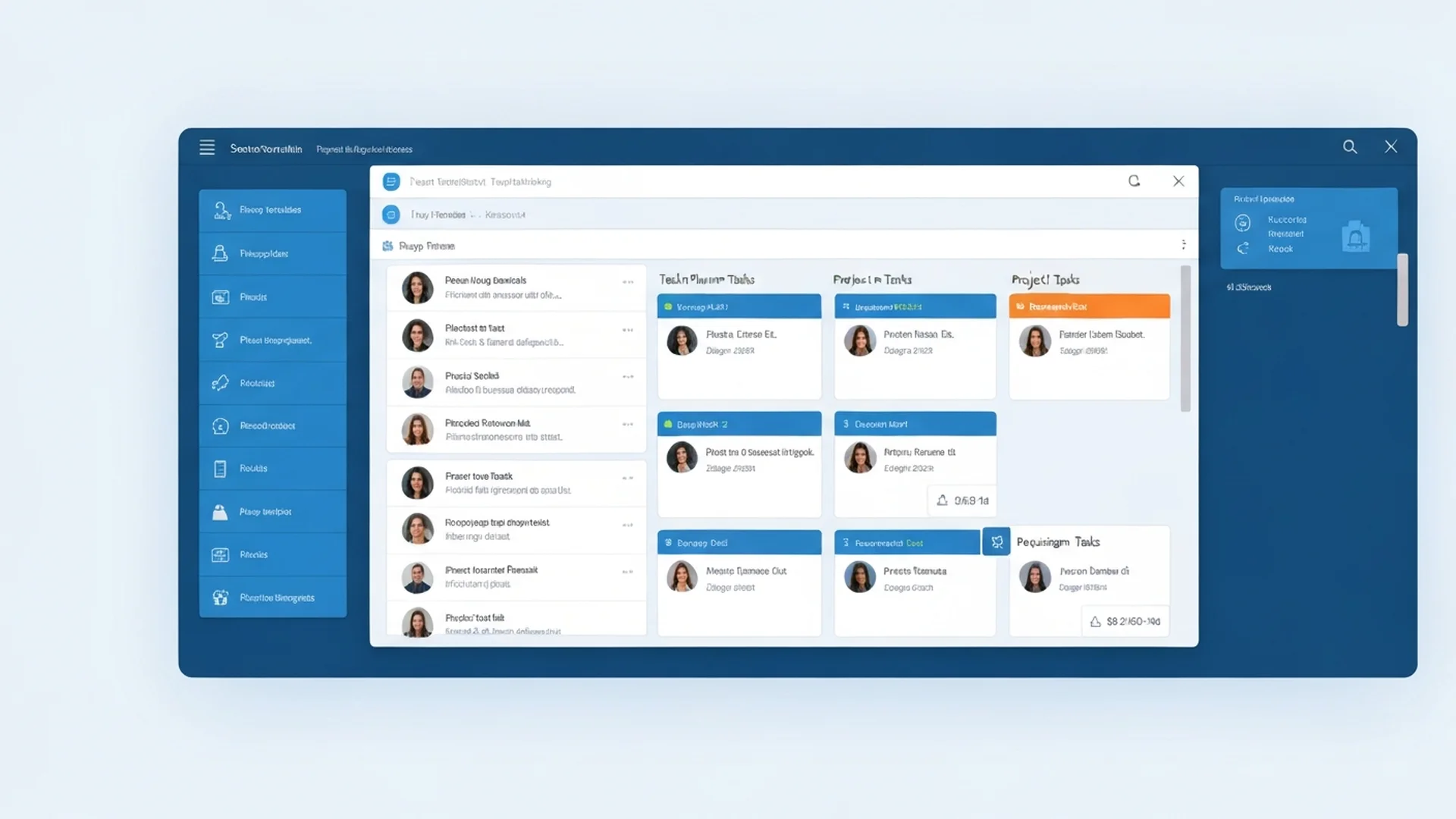
Microsoft Planner and SharePoint together create a powerful task management solution. Planner provides intuitive Kanban-style task boards, while SharePoint offers document storage, communication, and broader collaboration features. Understanding how to integrate them maximizes team productivity.
Understanding the Integration
How They Connect
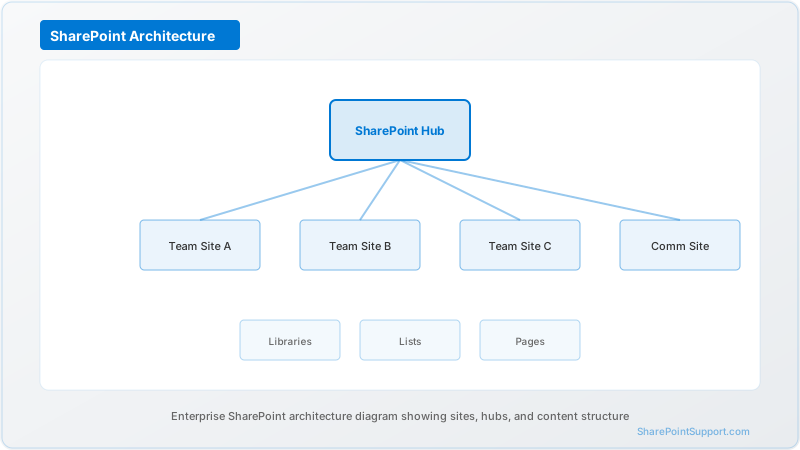
Microsoft 365 Group Foundation
When you create a Team Site, you get:
- SharePoint site for documents and pages
- Planner plan for task management
- Outlook shared mailbox
- OneNote notebook
- Teams channel (if Teams-enabled)
Integration Points
- Planner web part in SharePoint
- Tasks accessible from multiple interfaces
- Shared membership and permissions
- Unified search across content and tasks
What Planner Provides
Core Features
- Kanban task boards
- Buckets for categorization
- Assignments and due dates
- Labels for priority/category
- Checklists within tasks
- File attachments
- Comments and conversations
Views
- Board view (Kanban)
- Chart view (progress visualization)
- Schedule view (calendar)
- My Tasks (personal view)
Setting Up Integration
Creating a Plan with SharePoint Site
Option 1: Start from SharePoint
- Create Team Site
- Plan is automatically created
- Access via left navigation or Planner web part
Option 2: Start from Planner
- Create new plan
- Select existing Microsoft 365 Group
- Plan connects to existing SharePoint site
Option 3: Start from Teams
- Create Team (creates M365 Group)
- Add Planner tab to channel
- SharePoint site already connected
Adding Planner Web Part to SharePoint
Configuration Steps
- Edit SharePoint page
- Add Planner web part
- Select existing plan (or create new)
- Choose display options:
- Board view
- Show bucket headers
- Show completed tasks
- Publish page
Display Options
- Full plan (all buckets)
- Specific bucket only
- My tasks only
- Chart view embed
Creating Task Links in SharePoint
Link Tasks to Documents
- Open task in Planner
- Click "Add attachment"
- Browse to SharePoint file
- File linked for easy access
Link Documents to Tasks
- In SharePoint library
- Create column for task reference
- Add Planner task link
- Track document status
Task Management Best Practices
Structuring Plans
Bucket Strategies
By Status
```
Plan: Marketing Campaign
├── To Do
├── In Progress
├── In Review
└── Completed
```
By Category
```
Plan: Website Redesign
├── Design
├── Development
├── Content
├── Testing
└── Launch
```
By Sprint/Phase
```
Plan: Product Development
├── Sprint 1 (Jan 1-14)
├── Sprint 2 (Jan 15-28)
├── Sprint 3 (Jan 29-Feb 11)
└── Backlog
```
Effective Task Creation
Task Elements
- Clear, action-oriented title
- Detailed description
- Due date (realistic)
- Assigned to specific person(s)
- Appropriate labels
- Checklist for subtasks
- Relevant attachments
Good Task Examples
```
Title: Create Q1 marketing budget presentation
Description: Prepare PowerPoint presentation summarizing Q1 marketing spend vs. budget for leadership review meeting on 2/15.
Due: February 10
Assigned: Sarah Chen
Labels: High Priority, Finance
Checklist:
[ ] Pull spending data from finance system
[ ] Create visualizations
[ ] Add variance analysis
[ ] Review with marketing director
[ ] Finalize for meeting
```
Labels and Categorization
Label Strategies
Priority Labels
- Red: Urgent/Critical
- Yellow: High Priority
- Green: Normal
- Blue: Low Priority
Category Labels
- Purple: Client-facing
- Pink: Internal
- Teal: Documentation
- Gray: Administrative
Configure Labels
- Plan settings
- Edit label names
- Use consistently across tasks
Project Tracking with SharePoint
Project Dashboard Page
Dashboard Components
- Planner web part (task board)
- News for project updates
- Document library quick view
- Team members web part
- Key dates/milestones
Example Layout
```
┌─────────────────────────────────────────┐
│ Project Name Banner │
├─────────────────┬───────────────────────┤
│ Quick Stats │ Planner Board │
│ - Tasks: 45 │ [Embedded Planner] │
│ - Complete: 30│ │
│ - Overdue: 3 │ │
├─────────────────┼───────────────────────┤
│ Recent Documents│ Project News │
│ [Library View] │ [News Posts] │
└─────────────────┴───────────────────────┘
```
Progress Reporting
Planner Chart View
- Tasks by bucket
- Tasks by assigned
- Tasks by progress
- Tasks by due date
Export Options
- Export to Excel
- Copy chart images
- Create Power BI connection
Status Page Updates
Create regular status pages:
- Embed Planner chart
- Summarize key accomplishments
- Highlight blockers
- Note upcoming milestones
- Save as news post for distribution
Power Automate Integration
Automated Workflows
Task Creation Automation
```
Trigger: When item created in SharePoint list
Action: Create Planner task
- Title: Item title
- Bucket: Specified bucket
- Due date: Item due date
- Assigned: Item assignee
```
Task Completion Automation
```
Trigger: When Planner task completed
Action: Update SharePoint list item
- Set Status to "Completed"
- Set Completed Date to now
```
Notification Automation
```
Trigger: When Planner task due date approaches
Condition: Due in 2 days
Action: Send email reminder
- To: Assigned user
- Include task details
```
Common Automation Scenarios
Document Approval Workflow
- Document uploaded to SharePoint
- Task created in Planner for review
- Reviewer completes task
- Document status updated
- Author notified
Onboarding Workflow
- New employee added to list
- Onboarding tasks created in Planner
- Tasks assigned to various departments
- Progress tracked automatically
- Completion reported to HR
Teams Integration
Planner Tab in Teams
Adding Planner to Teams
- Go to team channel
- Add tab (+)
- Select Planner
- Create new or use existing plan
- Plan appears in channel
Benefits of Teams + Planner
- Task discussions in channel
- @mentions notify assignees
- Files shared via Teams/SharePoint
- Unified collaboration experience
Task Management from Teams
From Teams Chat
- Create tasks from messages
- Assign directly from conversation
- View My Tasks in Teams
Task App in Teams
- Aggregates all your tasks
- Planner, To Do, Outlook
- Single view of work
Governance and Best Practices
Plan Governance
Naming Conventions
- [Department] - [Project Name]
- [Year] [Initiative]
- Consistent across organization
Plan Lifecycle
- Create plan for project/initiative
- Active use during project
- Archive when complete
- Delete after retention period
Regular Maintenance
- Weekly: Review overdue tasks
- Monthly: Clean up completed tasks
- Quarterly: Archive inactive plans
Permission Considerations
Who Can Access Plans
- M365 Group members
- SharePoint site members
- Based on group membership
Permission Management
- Add users to M365 Group
- Automatically grants Planner access
- Same as SharePoint site access
Troubleshooting
Common Issues
Plan Not Showing
- Check M365 Group membership
- Verify plan exists
- Clear browser cache
- Check Planner service status
Web Part Not Working
- Correct plan selected?
- User has access?
- Plan has content?
- Try different view
Tasks Not Syncing
- Refresh browser
- Check network connectivity
- Verify service health
- Report persistent issues
Conclusion
Microsoft Planner and SharePoint together provide a comprehensive task and project management solution. By properly integrating them, leveraging automation, and following best practices, teams can effectively manage work while keeping documentation and communication centralized.
Ready to optimize your task management? Contact our collaboration specialists for implementation assistance.
Enterprise Implementation Best Practices
In our 25+ years managing enterprise SharePoint environments, we have found that Planner-SharePoint integration delivers the most value when it bridges the gap between task execution and document management, giving teams a unified workspace for getting work done.
- Create Standardized Plan Templates for Recurring Projects: Develop Planner plan templates with predefined buckets, task categories, and checklists for your organization's most common project types. When a new project launches, copy the template rather than building from scratch. This ensures consistent task structure, complete checklists, and appropriate labels across all projects. Store template documentation in the associated SharePoint site for reference.
- Link Planner Tasks to SharePoint Documents: Configure tasks in Planner to link directly to related documents in the associated SharePoint document library. A task to review a contract should link directly to the contract document. A task to approve a deliverable should link to the deliverable file. These links eliminate the time users spend searching for related content and ensure task completion includes engagement with the actual work product.
- Automate Task Creation from SharePoint Events: Use Power Automate to create Planner tasks automatically from SharePoint triggers. When a document requiring review is uploaded to a specific library, automatically create a review task assigned to the appropriate reviewer. When a contract reaches its renewal date, create a renewal task assigned to the account manager. When a compliance policy is updated, create review tasks for all affected department heads. These automations ensure nothing falls through the cracks through SharePoint consulting integration.
- Build Project Dashboards with Planner Web Parts: Embed the Planner web part on SharePoint project sites to display task status alongside project documents, team news, and resource links. This creates a single-page project dashboard where project managers can monitor task progress, access deliverables, and communicate with the team without switching between applications. Configure multiple views showing tasks by bucket, by assignee, and by due date for different management perspectives.
- Implement Capacity Management Across Plans: For organizations running multiple concurrent projects, aggregate Planner data through Power BI dashboards connected to the Microsoft Graph API. Visualize task assignments across all plans to identify overloaded team members, unbalanced workloads, and resource conflicts. Display these dashboards on a PMO hub site in SharePoint to give leadership visibility into organizational capacity.
Governance and Compliance Considerations
Planner tasks and associated SharePoint content must be governed together to maintain compliance and ensure audit readiness for organizations in regulated industries.
For HIPAA-regulated organizations, Planner tasks related to patient care processes may reference PHI in task titles, descriptions, or comments. Establish clear policies prohibiting the inclusion of patient-identifiable information in Planner task fields. Use coded references that link to patient records in secure systems rather than embedding PHI directly in task descriptions. Include Planner data in your HIPAA compliance training for clinical staff.
Retention policies for Planner data must align with your broader Microsoft 365 retention framework. Planner data associated with Microsoft 365 Groups follows the group's retention policies. Ensure that project-related Planner data is retained for the duration required by your records management schedule, particularly for projects that produce regulated deliverables. When projects complete, archive the associated Plan and SharePoint site together to maintain the relationship between tasks and deliverables for SharePoint support audit purposes.
Task assignment and completion records in Planner may serve as evidence of process execution for compliance audits. For organizations required to demonstrate that specific review, approval, or verification steps were completed by authorized personnel, Planner task completion records combined with SharePoint document version history provide a comprehensive audit trail.
Measuring Success and ROI
Planner-SharePoint integration ROI is measured through project execution efficiency and team collaboration improvements that demonstrate the combined platform is accelerating work delivery.
Track task completion rates across projects targeting 90 percent or higher on-time completion. Monitor the average time from task creation to completion compared to pre-Planner baselines. Measure the percentage of tasks with linked SharePoint documents targeting 80 percent or higher for document-related tasks. Track project delivery timelines comparing projects managed with integrated Planner-SharePoint versus previous project management methods. Monitor team satisfaction with task management tools through quarterly surveys targeting 4.0 or higher. Calculate time savings from automated task creation measuring the volume of tasks auto-generated through Power Automate flows.
Streamline your project management with integrated task and document management. Contact our team for a collaboration assessment and discover how our SharePoint consulting services can optimize your team productivity.
Common Challenges and Solutions
Organizations implementing Microsoft Planner + SharePoint consistently encounter obstacles that, if left unaddressed, undermine adoption and erode stakeholder confidence. Drawing on two decades of enterprise SharePoint consulting, these are the challenges we see most frequently and the proven approaches for overcoming them.
Challenge 1: Inconsistent Governance Across Business Units
When different departments implement Microsoft Planner + SharePoint independently, inconsistent naming conventions, metadata schemas, and security configurations create silos that undermine cross-functional collaboration and complicate compliance reporting. The resolution requires a structured approach: centralizing governance policy definition while allowing controlled flexibility at the departmental level. A hub-and-spoke governance model balances enterprise consistency with departmental autonomy. Organizations that address this proactively report 40 to 60 percent fewer support tickets within the first 90 days of deployment. Establishing a dedicated governance committee with representatives from IT, compliance, and business stakeholders ensures ongoing alignment between technical configuration and organizational objectives.
Challenge 2: Migration and Legacy Content Complexity
Organizations transitioning legacy content into Microsoft Planner + SharePoint often underestimate the complexity of mapping old structures, metadata, and permissions to modern architectures. Failed migrations erode user confidence and create parallel systems that duplicate effort. We recommend conducting thorough pre-migration content audits that classify and prioritize content based on business value. Invest in automated migration tools that preserve metadata fidelity and permission integrity while providing detailed validation reports. Tracking these metrics through SharePoint health dashboards provides early warning indicators that allow administrators to intervene before minor issues become systemic problems affecting enterprise-wide productivity.
Challenge 3: Permission and Access Sprawl
As Microsoft Planner + SharePoint scales across departments, permission structures inevitably become more complex. Without active governance, permission inheritance breaks down, sharing links proliferate, and sensitive content becomes accessible to unintended audiences. The most effective mitigation strategy involves implementing quarterly access reviews using the SharePoint Admin Center combined with automated reports that flag permission anomalies. Establish a principle of least privilege as the default and require documented justification for elevated access grants. Enterprises operating in regulated industries such as healthcare and financial services must pay particular attention to this challenge because compliance violations carry significant financial and reputational consequences. Regular audits conducted quarterly at minimum help organizations maintain alignment with evolving regulatory requirements and internal policy updates.
Challenge 4: Performance and Scalability Bottlenecks
Large-scale Microsoft Planner + SharePoint deployments frequently encounter performance issues as content volumes grow beyond initial design parameters. Large lists, deeply nested folder structures, and poorly optimized custom solutions contribute to slow page loads and frustrated users. Addressing this requires conducting regular performance audits that identify bottlenecks before they impact user experience. Implement list view thresholds, indexed columns, and pagination strategies that maintain responsive performance at enterprise scale. Organizations that invest in structured change management programs achieve adoption rates 35 percent higher than those relying on organic discovery alone. Executive sponsorship combined with department-level champions creates the organizational momentum necessary for sustained success.
Integration with Microsoft 365 Ecosystem
Microsoft Planner + SharePoint does not operate in isolation. Its value multiplies when connected to the broader Microsoft 365 ecosystem, creating unified workflows that eliminate context switching and reduce manual data transfer between applications.
Microsoft Teams Integration: Configure Teams notifications that alert stakeholders when Microsoft Planner + SharePoint content changes, ensuring that distributed teams stay informed about updates without relying on manual communication workflows. Teams channels automatically provision SharePoint document libraries, which means microsoft planner + sharepoint configurations and content flow seamlessly between collaborative conversations and structured document management. Users can surface SharePoint content directly within Teams tabs, reducing the friction that typically causes adoption to stall.
Power Automate Workflows: Create event-driven automations that respond to Microsoft Planner + SharePoint changes in real time, triggering downstream processes such as notifications, data transformations, and cross-system synchronization. Automated workflows triggered by SharePoint events such as document uploads, metadata changes, or approval completions eliminate repetitive manual tasks. Organizations typically automate 15 to 25 processes within the first quarter, saving an average of 8 hours per week per department. These automations also create audit trails that satisfy compliance requirements for regulated industries.
Power BI Analytics: Connect Microsoft Planner + SharePoint list and library data to Power BI datasets for advanced analytics that transform raw operational data into strategic business intelligence accessible to decision makers across the organization. Connecting SharePoint data to Power BI dashboards provides real-time visibility into content usage patterns, adoption metrics, and operational KPIs. Decision makers gain actionable intelligence without requiring manual report generation, enabling faster response to emerging trends and potential issues.
Microsoft Purview and Compliance: Configure data loss prevention policies that monitor Microsoft Planner + SharePoint content for sensitive information patterns, blocking or restricting sharing actions that could violate compliance requirements. Sensitivity labels, data loss prevention policies, and retention schedules configured in Microsoft Purview extend automatically to microsoft planner + sharepoint content. This unified compliance framework ensures that governance policies apply consistently across the entire Microsoft 365 environment rather than requiring separate configuration for each workload. For organizations subject to HIPAA, SOC 2, or FedRAMP requirements, this integrated approach significantly reduces compliance management overhead.
Getting Started: Next Steps
Implementing Microsoft Planner + SharePoint effectively requires more than technical configuration. It demands a strategic approach grounded in your organization's specific business requirements, compliance obligations, and growth trajectory. The difference between a deployment that delivers measurable ROI and one that becomes shelfware often comes down to the quality of upfront planning and expert guidance.
Begin with a focused assessment of your current SharePoint environment. Evaluate your existing information architecture, permission structures, content lifecycle policies, and user adoption patterns. Identify gaps between your current state and the target state required for successful microsoft planner + sharepoint implementation. This assessment typically takes 2 to 4 weeks and produces a prioritized roadmap that aligns technical work with business outcomes.
Our SharePoint specialists have guided organizations across healthcare, financial services, government, and education through hundreds of successful implementations. We bring deep expertise in SharePoint architecture, governance frameworks, and compliance alignment that accelerates time to value while minimizing risk.
Ready to move forward? Contact our team for a complimentary consultation. We will assess your environment, identify quick wins, and develop a phased implementation plan tailored to your organization's needs and timeline. Whether you are starting from scratch or optimizing an existing deployment, our enterprise SharePoint consultants deliver the depth and accountability enterprise SharePoint work requires.
Written by the SharePoint Support Team
Senior SharePoint Consultants | 25+ Years Microsoft Ecosystem Experience
Our senior SharePoint consultants bring deep expertise spanning 500+ enterprise migrations and compliance implementations across HIPAA, SOC 2, and FedRAMP environments. We cover SharePoint Online, Microsoft 365, migrations, Copilot readiness, and large-scale governance.
Expert SharePoint Services
Frequently Asked Questions
How does SharePoint integrate with Microsoft Teams?▼
What are the benefits of integrating Power BI with SharePoint?▼
How do we manage permissions across integrated Microsoft 365 services?▼
Can SharePoint integrate with non-Microsoft applications?▼
Need Expert Help?
Our SharePoint consultants are ready to help you implement these strategies in your organization.
Continue Reading in Integration
Microsoft Forms + SharePoint: Data Collection Guide
Integrate Microsoft Forms with SharePoint for powerful data collection workflows. Learn form creation, response routing to lists, Power Automate integration, and enterprise survey strategies.
IntegrationFederated Copilot Connectors: Live Intranet Data
Federated Copilot Connectors went GA at Build 2026. They query third-party systems live at prompt time — no indexing, no data residency headaches. Here are the top three intranet use cases and the setup steps.
IntegrationSharePoint and Microsoft Teams Integration: The Guide
Master the integration between SharePoint and Teams to create seamless collaboration experiences.
IntegrationPower BI + SharePoint: Embedded Analytics Guide
Embed Power BI reports in SharePoint for seamless data visualization. Learn embedding methods, security considerations, and best practices.
IntegrationMicrosoft Loop and SharePoint: Future of Collaboration
Explore how Microsoft Loop components integrate with SharePoint to create fluid, real-time collaboration experiences across the Microsoft 365 ecosystem.
IntegrationMicrosoft Stream + SharePoint: Video Content Management
Discover how the new Microsoft Stream built on SharePoint transforms enterprise video management with seamless integration, enhanced security, and improved discoverability.