
The Intranet Homepage: Your Organization's Digital Front Door
The SharePoint intranet homepage is the single most visited page in your entire Microsoft 365 environment, and it serves as the digital front door that shapes every employee's daily experience with the platform. When designed effectively, the homepage drives self-service adoption by putting frequently needed tools and information within easy reach, communicates organizational culture and priorities through targeted news and leadership content, and establishes the intranet as an indispensable daily destination that employees choose to visit rather than being forced to use. When designed poorly or neglected after launch, the homepage becomes a stale, generic page that employees learn to bypass on their way to bookmarked destinations deeper in the SharePoint environment, or worse, abandon entirely in favor of email, chat, and other less governed communication channels.
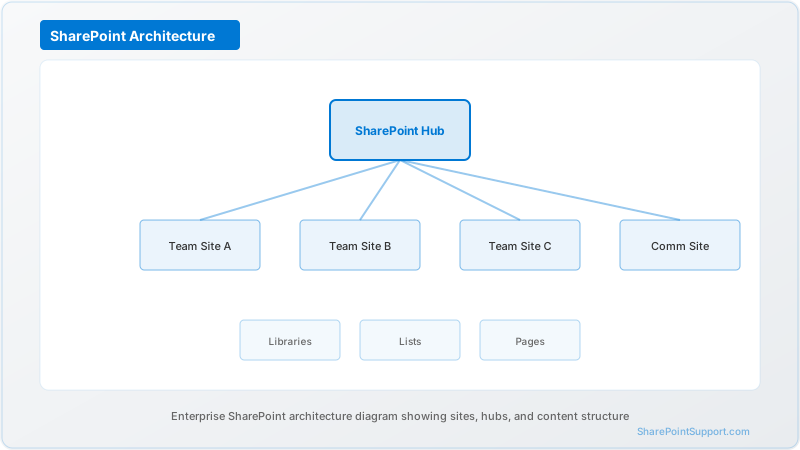
The fundamental challenge of intranet homepage design is serving diverse audiences with a single page. The information that a frontline worker needs is different from what a knowledge worker needs, which is different from what an executive needs. A well-designed SharePoint homepage uses audience targeting, personalized web parts, and intelligent layout to present relevant content to each visitor based on their role, department, location, and behavior patterns. This guide covers the design principles, web part configurations, content strategies, and governance practices that separate high-engagement SharePoint homepages from the generic default layouts that most organizations deploy and then wonder why nobody visits.
Understanding Your Audience Before Designing
A homepage that tries to serve everyone equally serves no one well. Before designing, conduct a brief audience analysis:
User Personas for Intranet Design
Information Worker (office-based, M365 heavy user):
- Needs: Company news, project updates, HR self-service, search
- Device: Desktop primary, laptop secondary
- Behavior: Visits daily, uses search frequently
Frontline Worker (shop floor, store, field):
- Needs: Shift schedules, safety notices, quick access to procedures, manager announcements
- Device: Mobile primary, shared kiosk secondary
- Behavior: Brief visits, task-focused, rarely browses
Executive:
- Needs: KPIs at a glance, business news, strategic initiatives
- Device: Desktop + mobile, always available
- Behavior: Skims headlines, expects professionalism
New Employee:
- Needs: Onboarding resources, org chart, who's who, essential policies
- Device: Whatever IT provides at start
- Behavior: Deep engagement for first 90 days, then normal usage
Design the homepage primarily for the Information Worker persona (your largest population), with secondary consideration for Frontline Workers (Viva Connections) and New Employees (onboarding section).
Homepage Layout Patterns
Pattern 1: News-Forward Layout (Most Common)
Best for organizations with active communications teams and frequent news content.
```
┌─────────────────────────────────────────────────────────┐
│ HERO BANNER (rotating news/announcements — full width) │
├─────────────────────────────────────────────────────────┤
│ QUICK LINKS (icon grid — 6-8 top tasks) │
├───────────────────────┬─────────────────────────────────┤
│ NEWS FEED │ QUICK LINKS PANEL │
│ (top stories - 3) │ + My Recent Documents │
│ │ + Upcoming Events │
├───────────────────────┼─────────────────────────────────┤
│ DEPARTMENTAL NEWS │ PEOPLE SPOTLIGHT │
│ (tabbed by dept) │ + New Hires │
│ │ + Birthdays/Anniversaries │
├───────────────────────┴─────────────────────────────────┤
│ SEARCH SPOTLIGHT (prominent search bar with suggestions)│
└─────────────────────────────────────────────────────────┘
```
Pattern 2: Dashboard Layout
Best for operations-heavy organizations where employees need KPIs and data.
```
┌─────────────────────────────────────────────────────────┐
│ PERSONALIZED GREETING + SEARCH (top section) │
├─────────┬───────────────┬─────────────────┬─────────────┤
│ METRIC │ METRIC │ METRIC │ METRIC │
│ CARD │ CARD │ CARD │ CARD │
├─────────┴───────────────┴─────────────────┴─────────────┤
│ QUICK LINKS (top tasks, 8-10 items, icon grid) │
├─────────────────────────┬───────────────────────────────┤
│ ANNOUNCEMENTS (3 items)│ MY WORK │
│ │ (assigned items, deadlines) │
├─────────────────────────┼───────────────────────────────┤
│ COMPANY NEWS │ EVENTS CALENDAR │
└─────────────────────────┴───────────────────────────────┘
```
Pattern 3: Hub-and-Spoke Layout
Best for large enterprises with distinct business units/divisions.
```
┌─────────────────────────────────────────────────────────┐
│ CORPORATE HEADER (brand identity, key company metrics) │
├─────────────────────────────────────────────────────────┤
│ TOP NEWS (2 featured corporate announcements) │
├────────────┬────────────┬────────────┬──────────────────┤
│ DIVISION │ DIVISION │ DIVISION │ CORPORATE │
│ HUB CARD │ HUB CARD │ HUB CARD │ TOOLS │
│ (Finance) │ (Ops) │ (HR) │ QUICK LINKS │
├────────────┴────────────┴────────────┴──────────────────┤
│ EMPLOYEE SERVICES (benefits, IT helpdesk, HR portal) │
└─────────────────────────────────────────────────────────┘
```
Web Parts for the Intranet Homepage
News Web Part (Essential)
The SharePoint News web part aggregates news posts from specified sites. Best practices:
- Source: Select 3-5 hub-associated sites (avoid "This site" only)
- Layout: Side-by-side or Hub News layout for homepage hero
- News count: 3-5 items max on homepage (link to /news for full feed)
- Audience targeting: Show different news to different Microsoft 365 groups
- Image requirements: All news posts require 16:9 hero image, 800px minimum width
Quick Links Web Part (Critical for Adoption)
Quick Links drives the highest adoption ROI of any intranet web part. Users come to the intranet for quick access to tools.
Top 10 most-clicked quick links (validated across 100+ intranet deployments):
- HR Portal / Benefits enrollment
- IT Helpdesk ticket submission
- Expense reporting
- Company directory / People search
- Payslips / Pay stubs
- Leave / PTO requests
- Company forms library
- Organization chart
- Learning / Training platform
- IT password reset
Configure Quick Links with:
- Icon style: Custom icons (SVG) or Fluent UI icons — avoid generic defaults
- Compact button layout: Works better than card layout on mobile
- Audience targeting: Show role-specific tools (HR-only, Finance-only)
- Grouping: Organize into sections (People & HR, Finance, IT, Collaboration)
Highlighted Content Web Part
Dynamically surfaces documents, pages, and news based on managed metadata or content type. Use for:
- "Recent Policies" — content type: Policy, sorted by modified date
- "New in the Knowledge Base" — tagged with specific term set values
- "Forms & Templates" — content type: Form
People Web Part
Show leadership team, department contacts, or new hires. Connect to Microsoft 365 profiles for automatic photo and job title updates.
Events Web Part
Surface events from SharePoint event lists or Microsoft 365 calendar. Configure:
- Source: Select all event lists in hub
- Display: 3-5 upcoming events with date and location
- Link: "View all events" to the events calendar page
Hero Web Part
The Hero web part (full-width banner) is the most visually prominent element. Best practices:
- 5-tile layout for enterprise intranets with lots of content
- Single tile layout for simpler homepages
- Always use high-quality 16:9 images (1920x1080 or better)
- Update hero content weekly minimum — stale hero content destroys credibility
- Link tiles to: top announcement, strategic initiative, new product, or key tool
Microsoft Search (Search Box Web Part)
Configure site search to scope to hub-associated sites. For the homepage, add a prominent search box above the fold. Include:
- Placeholder text: "Search for people, documents, tools, or news..."
- Vertical links below search box: "People", "Documents", "News", "Sites"
Personalization with Audience Targeting
Audience targeting shows/hides content based on Microsoft 365 group membership. This is the single biggest driver of intranet satisfaction — employees see relevant content, not generic company-wide noise.
Configuring Audience Targeting
- Enable audience targeting on News, Quick Links, and Highlighted Content web parts
- Create M365 groups per segment: HR-Staff, Finance-Staff, Executive, NewHires, etc.
- Configure audience per news article, quick link, and content item
- For Quick Links: create multiple instances with different audiences showing different tools
```
Audience Targeting Map:
Quick Links - Everyone: HR Portal, IT Helpdesk, Expense Report, Directory
Quick Links - Finance: AP Invoice Portal, Budget Tool, Financial Reporting
Quick Links - HR: HRIS System, Recruiting Tool, Benefits Admin
Quick Links - IT: Admin Center, Azure Portal, Intune Console
Quick Links - Managers: Performance Reviews, Headcount Reports, Approval Workflows
```
Performance Optimization for Homepage Load Speed
The homepage must load in under 3 seconds on desktop and 5 seconds on mobile. SharePoint Communication Site pages with 15+ web parts can load slowly.
Homepage Performance Best Practices
- Limit web parts: Maximum 10-12 web parts on homepage (not 25)
- Lazy-load below fold: Web parts below the visible area load after initial paint
- Optimize images: Hero and news images should be WebP format, <200KB
- Avoid iframes: Third-party embedded content slows page load significantly
- Limit real-time data: Minimize Highlighted Content web parts that query dynamically — cache results
- Defer analytics: Load Google Analytics or Matomo after page interaction, not on load
Measuring Homepage Performance
Use Microsoft 365 Page Diagnostics tool (Edge extension) to measure:
- Total page weight
- Number of requests
- Largest Contentful Paint (LCP)
- Cumulative Layout Shift (CLS)
Target: LCP < 2.5 seconds, CLS < 0.1
Mobile Design Requirements
With 30-40% of intranet traffic coming from mobile devices, responsive design is non-negotiable.
Mobile Testing Checklist
- [ ] Hero web part: Shows correctly at 375px width (iPhone SE)
- [ ] Quick Links: Minimum 3 columns at mobile width, touch targets ≥44px
- [ ] News web part: Single-column stack on mobile
- [ ] Search box: Thumb-accessible at bottom or top of screen
- [ ] Navigation: Hamburger menu accessible and functional
- [ ] Page weight: < 2MB total on mobile connection (test at 4G throttled)
- [ ] No horizontal scroll: Content wraps properly at all viewport sizes
Viva Connections for Frontline Workers
For mobile-first frontline workers, Viva Connections in Teams is superior to the browser-based intranet:
- Adaptive Card Dashboard for native mobile app experience
- Push notifications for critical announcements
- Works in Teams mobile app (no separate app needed)
- Offline capability for key resources
Content Governance for the Homepage
The homepage is often neglected after launch. Implement governance:
Homepage Content Refresh Schedule
| Element | Update Frequency | Owner |
|---------|-----------------|-------|
| Hero banner | Weekly minimum | Communications team |
| Featured news | Daily (auto-pull from news posts) | Content authors |
| Quick links | Quarterly audit | Intranet team |
| People spotlight | Monthly | HR |
| Events | As announced | Department coordinators |
| Metrics/KPIs | Real-time or daily | BI/IT team |
Editorial Calendar
Maintain a 4-week rolling content calendar for hero banners and featured news. Plan around:
- Earnings announcements
- Open enrollment periods
- Company all-hands events
- Industry awareness months (relevant to your sector)
- Strategic initiative milestones
Launch and Adoption Strategy
Technical excellence means nothing if employees don't use the intranet. Adoption program:
Pre-launch (4 weeks out):
- Pilot with 10-15 power users across departments
- Collect feedback on navigation, quick links, missing content
- Announce launch via email + MS Teams channel
Launch week:
- CEO or executive champion blog post/video on the intranet itself
- Department head "quick links" videos showing their teams how to find their 3 most-used tools
- IT Helpdesk ready for login/access questions
Post-launch (90 days):
- Weekly analytics review: page views, top content, bounce rate
- Monthly quick link audit: add items getting 0 clicks, promote items getting most clicks
- Quarterly user survey: Net Promoter Score for intranet satisfaction
Maintaining Homepage Relevance Over Time
A great SharePoint intranet homepage is never finished because the organization it serves is constantly evolving. New tools are adopted, organizational priorities shift, seasonal content needs change, and employee expectations grow as they become more familiar with the platform. The homepage must evolve alongside these changes through disciplined content governance and regular design reviews.
Establish a homepage governance cadence that includes weekly analytics reviews examining page views, time on page, most-clicked content, and bounce rates. Use these analytics to identify content that resonates and content that is being ignored. Conduct monthly quick link audits that add emerging high-demand destinations, remove or reorganize links that receive zero clicks, and promote items that are getting high click-through rates to more prominent positions. Run quarterly user satisfaction surveys using a Net Promoter Score format that measures whether employees find the homepage useful and would recommend it to colleagues.
Content freshness is the most critical factor in sustained homepage engagement. A homepage where the hero image has not changed in three months and the news feed shows articles from last quarter signals to employees that the intranet is not maintained and not worth visiting. Implement editorial calendar processes that ensure at least two to three fresh news posts appear on the homepage each week, rotate hero content on a weekly or bi-weekly basis, and update quick links whenever new tools or resources are launched. Leadership visibility on the homepage, through executive blog posts, video messages, or featured commentary on organizational news, significantly increases homepage engagement because it signals that the intranet is valued at the highest levels of the organization.
If your organization needs help designing, launching, or revitalizing your SharePoint intranet homepage, our SharePoint consulting services include homepage design, web part configuration, audience targeting setup, analytics implementation, and ongoing content governance consulting. Contact our team to evaluate your current intranet homepage or design a new one that employees will actually use every day.
Enterprise Implementation Best Practices
In our 25+ years of enterprise SharePoint consulting, we have designed and deployed intranet solutions for organizations with 500 to 150,000 employees across every industry. The intranet implementations that achieve high adoption and sustained engagement share a common foundation: they are designed around employee needs rather than organizational hierarchy.
- Conduct a User Needs Assessment Before Designing Navigation: Survey and interview employees across departments and levels to understand what information they need daily, where they currently struggle to find content, and what tasks they perform most frequently on the intranet. Design your navigation, hub structure, and home page layout based on these findings rather than mirroring the organizational chart.
- Implement a Hub Site Architecture with Clear Purpose: Every hub site should serve a distinct audience or purpose. Avoid creating hubs that overlap in scope or serve as generic containers. Define each hub's mission, target audience, content owners, and governance requirements before provisioning. Link related hubs through shared navigation and cross-hub content rollups that help users discover relevant information across organizational boundaries.
- Design for Mobile First: Over 40 percent of intranet traffic in most organizations comes from mobile devices, yet many intranets are designed exclusively for desktop viewing. Test every page, web part, and navigation element on actual mobile devices. Prioritize critical information and quick actions in the mobile layout rather than simply shrinking the desktop experience.
- Establish a Content Publishing Governance Model: An intranet is only as valuable as the freshness and accuracy of its content. Assign content owners for every section, implement editorial review workflows, configure content expiration that flags stale pages for review, and publish a content calendar that ensures regular updates across all intranet sections.
- Measure Engagement and Iterate Continuously: Deploy analytics that track page views, unique visitors, search queries, time on page, and task completion rates. Review these metrics monthly with content owners and stakeholders. Use the data to retire underperforming content, promote popular resources, and refine navigation based on actual usage patterns rather than assumptions.
Governance and Compliance Considerations
Intranet deployments in SharePoint must address compliance requirements that many organizations overlook because intranets are perceived as internal communication tools rather than regulated information systems. However, intranets frequently contain policy documents, employee data, financial results, and other content subject to regulatory controls.
For HIPAA-regulated organizations, intranet pages that reference clinical protocols, patient population statistics, or health plan information must be access-controlled to prevent unauthorized disclosure. Apply sensitivity labels to health-related content, restrict access to human resources pages containing employee health information, and ensure that news posts do not inadvertently disclose protected information.
Financial services organizations must control access to intranet pages containing material non-public information, internal financial results, and strategic plans that could constitute insider information. Implement publication workflows that include compliance review for financially sensitive announcements and restrict access to pre-release financial content to authorized personnel only.
Government organizations must ensure that intranet content classifications align with security frameworks and that access controls prevent unauthorized access to controlled content published through the intranet.
Establish content governance policies for your intranet that address publication approval requirements, content classification standards, access restrictions for sensitive pages, and retention rules for archived communications. Implement editorial workflows that route sensitive content through compliance review before publication. Track content freshness and enforce review cycles that ensure published policies and procedures remain current and accurate. Our SharePoint intranet specialists design communication architectures that engage employees while maintaining the compliance controls your regulated environment requires.
Ready to build an intranet that employees actually want to use? Our intranet specialists have designed and deployed engaging digital workplaces for organizations with hundreds to tens of thousands of employees. Contact our team for an intranet strategy consultation, and explore how our SharePoint consulting services can create a connected employee experience.
Common Challenges and Solutions
Organizations implementing SharePoint Intranet Homepage Design consistently encounter obstacles that, if left unaddressed, undermine adoption and erode stakeholder confidence. Drawing on two decades of enterprise SharePoint consulting, these are the challenges we see most frequently and the proven approaches for overcoming them.
Challenge 1: Permission and Access Sprawl
As SharePoint Intranet Homepage Design scales across departments, permission structures inevitably become more complex. Without active governance, permission inheritance breaks down, sharing links proliferate, and sensitive content becomes accessible to unintended audiences. The resolution requires a structured approach: implementing quarterly access reviews using the SharePoint Admin Center combined with automated reports that flag permission anomalies. Establish a principle of least privilege as the default and require documented justification for elevated access grants. Organizations that address this proactively report 40 to 60 percent fewer support tickets within the first 90 days of deployment. Establishing a dedicated governance committee with representatives from IT, compliance, and business stakeholders ensures ongoing alignment between technical configuration and organizational objectives.
Challenge 2: Performance and Scalability Bottlenecks
Large-scale SharePoint Intranet Homepage Design deployments frequently encounter performance issues as content volumes grow beyond initial design parameters. Large lists, deeply nested folder structures, and poorly optimized custom solutions contribute to slow page loads and frustrated users. We recommend conducting regular performance audits that identify bottlenecks before they impact user experience. Implement list view thresholds, indexed columns, and pagination strategies that maintain responsive performance at enterprise scale. Tracking these metrics through SharePoint health dashboards provides early warning indicators that allow administrators to intervene before minor issues become systemic problems affecting enterprise-wide productivity.
Challenge 3: Search Relevance and Content Discoverability
Poor search experiences are among the top complaints users raise about SharePoint Intranet Homepage Design deployments. When search returns irrelevant results or fails to surface critical documents, users abandon the platform in favor of ad-hoc workarounds like email attachments and local file shares. The most effective mitigation strategy involves investing in managed metadata term stores, consistent content type usage, and search schema configuration. Promote high-value content through bookmarks and acronyms in Microsoft Search, and regularly review search analytics to identify and close discoverability gaps. Enterprises operating in regulated industries such as healthcare and financial services must pay particular attention to this challenge because compliance violations carry significant financial and reputational consequences. Regular audits conducted quarterly at minimum help organizations maintain alignment with evolving regulatory requirements and internal policy updates.
Challenge 4: User Adoption Resistance
Many organizations deploy SharePoint Intranet Homepage Design with technically sound configurations but fail to achieve meaningful adoption because end users default to familiar workflows. The root cause is almost always insufficient change management rather than flawed technology. Addressing this requires developing role-specific training modules that demonstrate tangible time savings for each user persona, combined with executive communications that reinforce the strategic importance of the transition. Organizations that invest in structured change management programs achieve adoption rates 35 percent higher than those relying on organic discovery alone. Executive sponsorship combined with department-level champions creates the organizational momentum necessary for sustained success.
Integration with Microsoft 365 Ecosystem
SharePoint Intranet Homepage Design does not operate in isolation. Its value multiplies when connected to the broader Microsoft 365 ecosystem, creating unified workflows that eliminate context switching and reduce manual data transfer between applications.
Microsoft Teams Integration: Embed SharePoint Intranet Homepage Design dashboards and document libraries as Teams tabs to create unified workspaces where conversations and structured content management coexist within a single interface. Teams channels automatically provision SharePoint document libraries, which means sharepoint intranet homepage design configurations and content flow seamlessly between collaborative conversations and structured document management. Users can surface SharePoint content directly within Teams tabs, reducing the friction that typically causes adoption to stall.
Power Automate Workflows: Implement scheduled flows that perform routine SharePoint Intranet Homepage Design maintenance tasks including permission reports, content audits, and usage analytics without requiring manual intervention. Automated workflows triggered by SharePoint events such as document uploads, metadata changes, or approval completions eliminate repetitive manual tasks. Organizations typically automate 15 to 25 processes within the first quarter, saving an average of 8 hours per week per department. These automations also create audit trails that satisfy compliance requirements for regulated industries.
Power BI Analytics: Build executive dashboards that aggregate SharePoint Intranet Homepage Design metrics alongside other business KPIs, providing a holistic view of digital workplace effectiveness and investment returns. Connecting SharePoint data to Power BI dashboards provides real-time visibility into content usage patterns, adoption metrics, and operational KPIs. Decision makers gain actionable intelligence without requiring manual report generation, enabling faster response to emerging trends and potential issues.
Microsoft Purview and Compliance: Implement retention policies that automatically manage SharePoint Intranet Homepage Design content lifecycle, preserving business-critical records for required periods while disposing of transient content to reduce storage costs and compliance exposure. Sensitivity labels, data loss prevention policies, and retention schedules configured in Microsoft Purview extend automatically to sharepoint intranet homepage design content. This unified compliance framework ensures that governance policies apply consistently across the entire Microsoft 365 environment rather than requiring separate configuration for each workload. For organizations subject to HIPAA, SOC 2, or FedRAMP requirements, this integrated approach significantly reduces compliance management overhead.
Getting Started: Next Steps
Implementing SharePoint Intranet Homepage Design effectively requires more than technical configuration. It demands a strategic approach grounded in your organization's specific business requirements, compliance obligations, and growth trajectory. The difference between a deployment that delivers measurable ROI and one that becomes shelfware often comes down to the quality of upfront planning and expert guidance.
Begin with a focused assessment of your current SharePoint environment. Evaluate your existing information architecture, permission structures, content lifecycle policies, and user adoption patterns. Identify gaps between your current state and the target state required for successful sharepoint intranet homepage design implementation. This assessment typically takes 2 to 4 weeks and produces a prioritized roadmap that aligns technical work with business outcomes.
Our SharePoint specialists have guided organizations across healthcare, financial services, government, and education through hundreds of successful implementations. We bring deep expertise in SharePoint architecture, governance frameworks, and compliance alignment that accelerates time to value while minimizing risk.
Ready to move forward? Contact our team for a complimentary consultation. We will assess your environment, identify quick wins, and develop a phased implementation plan tailored to your organization's needs and timeline. Whether you are starting from scratch or optimizing an existing deployment, our enterprise SharePoint consultants deliver the expertise and accountability that Fortune 500 organizations demand.
Written by the SharePoint Support Team
Senior SharePoint Consultants | 25+ Years Microsoft Ecosystem Experience
Our senior SharePoint consultants bring deep expertise spanning 500+ enterprise migrations and compliance implementations across HIPAA, SOC 2, and FedRAMP environments. We cover SharePoint Online, Microsoft 365, migrations, Copilot readiness, and large-scale governance.
Expert SharePoint Services
Frequently Asked Questions
What makes a successful SharePoint intranet?▼
How much does a SharePoint intranet project typically cost?▼
Should we use Viva Connections or a custom SharePoint intranet?▼
How do we measure SharePoint intranet ROI?▼
How do we evaluate SharePoint against competing platforms?▼
Need Expert Help?
Our SharePoint consultants are ready to help you implement these strategies in your organization.
Continue Reading in Features
SharePoint Premium: Advanced Features Worth the Investment
Discover the advanced capabilities of SharePoint Premium including AI-powered document processing, enhanced content services, and enterprise-grade compliance features that justify the investment.
FeaturesAudience Targeting in SharePoint: Personalized Content
Learn how to implement audience targeting in SharePoint to deliver personalized content experiences based on user groups, roles, and attributes.
FeaturesSharePoint for Project Management: The Guide for 2026
How enterprises use SharePoint for project management — from simple task tracking to complex PMO portals. Includes setup templates, integration with Planner and Teams, and when to use SharePoint vs dedicated PM tools.
FeaturesSharePoint Version History & File Management Best Practices
Master SharePoint version history, version limits, storage impact, and file lifecycle management. Learn when to keep versions, how to configure limits, restore previous versions, and automate cleanup for enterprise-scale document libraries.
FeaturesSharePoint Hub Sites for Enterprise
Master SharePoint hub sites to create a connected, unified intranet experience. Learn hub site architecture patterns, hub of hubs design, navigation inheritance, shared search scope, and how to design a hub hierarchy that scales with your organization.
FeaturesSharePoint News Web Part: Guide to Intranet Communications
Master the SharePoint News web part to build an engaging, targeted intranet news experience. Learn news post types, audience targeting, approval workflows, news digests, and best practices for driving employee engagement through SharePoint.