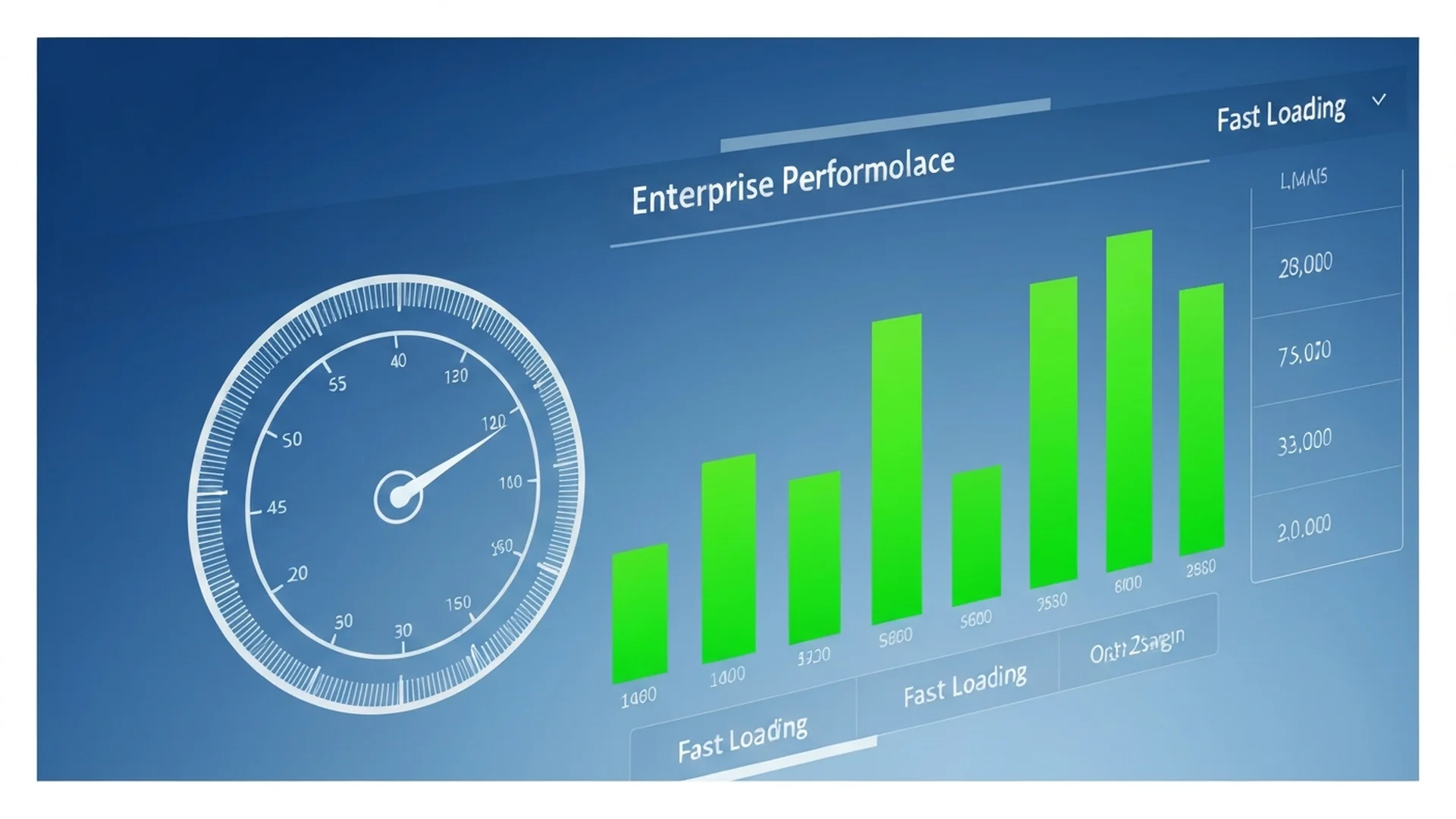
Why Performance Matters
Slow SharePoint sites frustrate users and reduce adoption. Every second of delay impacts productivity.
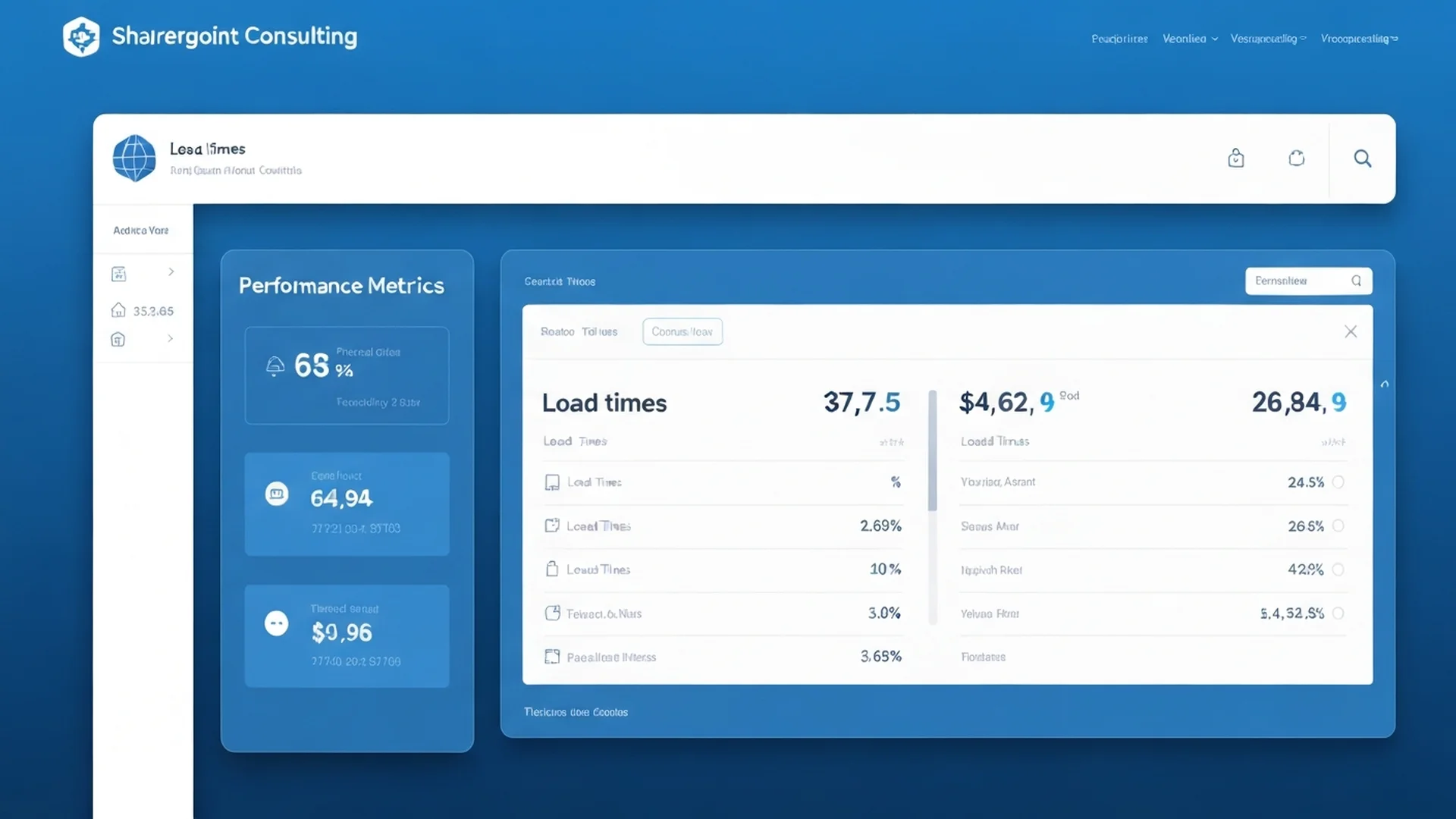
Performance Metrics
Core Web Vitals
Google's key metrics:
- LCP (Largest Contentful Paint): Main content load time
- FID (First Input Delay): Time to interactive
- CLS (Cumulative Layout Shift): Visual stability
SharePoint-Specific Metrics
Additional metrics to track:
- Page load time
- Search response time
- Document preview time
- Navigation speed
Optimization Techniques
1. Content Optimization
Reduce what needs to load:
Images:
- Compress before upload
- Use appropriate dimensions
- Leverage lazy loading
- Consider modern formats (WebP)
Documents:
- Avoid embedding large files
- Use thumbnails for previews
- Link instead of embed
2. Page Structure
Optimize page architecture:
Sections:
- Limit sections per page
- Collapse unused sections
- Use appropriate layouts
Web Parts:
- Limit web parts per page
- Avoid redundant web parts
- Configure data limits
3. List and Library Performance
Optimize data structures:
Indexed Columns:
- Index frequently filtered columns
- Index lookup columns
- Index date columns for views
View Optimization:
- Limit items per view
- Use pagination
- Filter views appropriately
Threshold Management:
- Stay under 5,000 item threshold
- Use indexed column filters
- Consider archiving old items
4. Navigation
Speed up site navigation:
- Limit navigation nodes
- Use audience targeting
- Cache navigation structure
- Avoid complex mega menus
5. Search Performance
Optimize search queries:
- Use result sources appropriately
- Limit result counts
- Configure caching
- Avoid complex queries
Advanced Optimization
CDN Configuration
Leverage Content Delivery Network:
- Enable public CDN for static assets
- Configure private CDN for dynamic content
- Test performance improvements
Page Caching
Configure appropriate caching:
- Page output caching
- Blob caching
- Object caching
Custom Solutions
If using custom development:
- Minimize JavaScript
- Optimize SPFx web parts
- Use async loading
- Implement pagination
Monitoring
Built-in Tools
SharePoint analytics:
- Site usage reports
- Page analytics
- User activity
External Tools
Additional monitoring:
- Browser developer tools
- Network analysis
- Performance profilers
Best Practices
Design Phase
Plan for performance:
- Keep pages focused
- Limit web parts
- Plan content strategy
- Design efficient navigation
Implementation Phase
Build for speed:
- Optimize images before upload
- Test page performance
- Use modern web parts
- Configure appropriate views
Operations Phase
Maintain performance:
- Regular performance audits
- Content cleanup
- Archive old content
- Monitor analytics
Common Issues
Slow Page Loads
Causes:
- Too many web parts
- Large images
- Complex queries
- Heavy customizations
Solutions:
- Reduce web parts
- Optimize images
- Simplify queries
- Review custom code
List View Threshold
Causes:
- Unindexed filters
- Large lists
- Complex views
Solutions:
- Add indexes
- Archive data
- Simplify views
- Use metadata navigation
Conclusion
SharePoint performance optimization requires attention at design, implementation, and operations phases. Regular monitoring and optimization ensure continued good performance.
Experiencing slow SharePoint performance? Our experts can analyze your environment and recommend optimizations.
Enterprise Implementation Best Practices
In our 25+ years managing enterprise SharePoint environments, performance optimization has been one of the most requested services because slow SharePoint directly impacts user adoption and productivity. Organizations with fast, responsive SharePoint experiences see adoption rates 40 to 60 percent higher than those with sluggish environments.
- Establish Performance Baselines Before Optimization: Before making changes, measure your current performance across multiple dimensions including page load time, time to interactive, search response time, and list query response time. Use the SharePoint diagnostic page and browser developer tools to capture baseline metrics from multiple geographic locations during peak and off-peak hours. Without baselines, you cannot quantify the impact of your optimizations or identify regressions.
- Optimize Page Design for Core Web Vitals: SharePoint modern pages must meet Core Web Vitals thresholds for Largest Contentful Paint under 2.5 seconds, First Input Delay under 100 milliseconds, and Cumulative Layout Shift under 0.1. Reduce the number of web parts per page to 10 or fewer, use lazy loading for web parts below the fold, optimize hero images to WebP format at appropriate dimensions, and avoid custom CSS that triggers layout shifts during page rendering.
- Implement Strategic Content Distribution: Large document libraries with tens of thousands of items degrade performance for every user accessing them. Implement a content distribution strategy that spreads documents across multiple libraries organized by logical boundaries such as department, year, or project. Use hub site search and content rollup web parts to provide unified views across distributed libraries without the performance penalty of a single massive library.
- Configure List View Thresholds Properly: The SharePoint list view threshold of 5,000 items is the most common performance bottleneck in enterprise environments. Index all columns used in views, filters, and sorts. Create filtered views that return fewer than 5,000 items by default. For lists that must contain more than 5,000 items, implement metadata navigation and key filters that ensure queries always leverage indexed columns. Educate site owners on why the threshold exists and how to design lists that work within it.
- Optimize Custom Solutions and SPFx Web Parts: Custom SharePoint Framework web parts are a frequent cause of performance degradation. Audit all custom web parts for excessive API calls, inefficient data loading patterns, large JavaScript bundle sizes, and missing caching implementations. Implement data caching with appropriate expiration times, use batch API requests instead of individual calls, lazy load non-critical components, and tree-shake unused dependencies to reduce bundle sizes. Require performance testing as part of your SharePoint development review process.
- Leverage CDN and Caching Infrastructure: Enable the Office 365 CDN for SharePoint to serve static assets from edge locations closest to your users. Configure both public and private CDN origins for appropriate content types. Implement browser caching headers for custom static assets and configure the SharePoint page cache for pages that do not change frequently. For global organizations, CDN optimization alone can reduce page load times by 30 to 50 percent for users in remote locations.
Governance and Compliance Considerations
Performance optimization must be balanced against governance and compliance requirements that may constrain certain optimization approaches. Understanding these constraints prevents optimization efforts from introducing compliance gaps.
Caching strategies must account for data sensitivity classifications. While aggressive caching improves performance, caching sensitive content on CDN edge nodes or in browser local storage may violate data residency requirements or create security risks. Configure CDN exclusions for document libraries containing regulated content, and implement cache-busting mechanisms for content that changes frequently or is subject to access control updates. HIPAA-regulated content should never be served through public CDN origins.
Performance monitoring tools that capture page load telemetry may collect user behavior data that falls under privacy regulations. Ensure your performance monitoring approach complies with GDPR consent requirements for EU users and does not capture personally identifiable information in performance logs without appropriate data processing agreements. Use anonymized or aggregated performance data for optimization analysis wherever possible.
Content distribution strategies that move documents across site collections for performance reasons must preserve compliance metadata including retention labels, sensitivity classifications, and audit trail continuity. Verify that your SharePoint migration tools maintain full compliance metadata fidelity when redistributing content. Any content movement should be documented in your records management system to maintain chain of custody for regulated documents.
Measuring Success and ROI
Performance optimization ROI is directly quantifiable through user productivity metrics and infrastructure cost savings. Fast SharePoint environments deliver measurable business value that justifies ongoing optimization investment.
Track page load times across your most critical SharePoint pages targeting under 3 seconds for initial load and under 1 second for subsequent navigation. Monitor search response times targeting under 2 seconds for queries returning results. Measure list and library response times targeting under 1 second for views returning fewer than 100 items. Track user satisfaction through quarterly surveys specifically addressing SharePoint responsiveness targeting 4.0 or higher on a 5-point scale. Calculate productivity gains by multiplying time saved per page load by the number of daily page loads across your user base. Monitor help desk tickets related to SharePoint performance issues targeting a 60 percent reduction within 90 days of optimization. Track user adoption rates before and after optimization to quantify the relationship between performance and engagement.
Stop losing productivity to slow SharePoint performance. Our performance optimization specialists have accelerated SharePoint environments for organizations with hundreds of thousands of users across global deployments. Contact our team for a performance assessment and discover how our SharePoint support services can transform your user experience.
Common Challenges and Solutions
Organizations implementing SharePoint Performance Optimization consistently encounter obstacles that, if left unaddressed, undermine adoption and erode stakeholder confidence. Drawing on two decades of enterprise SharePoint consulting, these are the challenges we see most frequently and the proven approaches for overcoming them.
Challenge 1: Content Sprawl and Information Architecture Degradation
Over time, SharePoint Performance Optimization environments accumulate redundant, outdated, and trivial content that degrades search relevance and confuses users. Without proactive content lifecycle management, the signal-to-noise ratio deteriorates and user trust in the platform erodes. The resolution requires a structured approach: establishing automated retention policies that flag content for review after defined periods of inactivity, combined with content owner accountability structures that assign clear responsibility for each site collection and library. Organizations that address this proactively report 40 to 60 percent fewer support tickets within the first 90 days of deployment. Establishing a dedicated governance committee with representatives from IT, compliance, and business stakeholders ensures ongoing alignment between technical configuration and organizational objectives.
Challenge 2: Compliance and Audit Readiness Gaps
SharePoint Performance Optimization implementations in regulated industries often lack the audit trail depth and policy enforcement rigor required by frameworks such as HIPAA, SOC 2, and GDPR. Retroactive compliance remediation is significantly more expensive and disruptive than building compliance into the initial design. We recommend embedding compliance requirements into the information architecture from day one. Configure Microsoft Purview retention labels, DLP policies, and audit logging before deploying content, and validate compliance posture through regular internal audits. Tracking these metrics through SharePoint health dashboards provides early warning indicators that allow administrators to intervene before minor issues become systemic problems affecting enterprise-wide productivity.
Challenge 3: Inconsistent Governance Across Business Units
When different departments implement SharePoint Performance Optimization independently, inconsistent naming conventions, metadata schemas, and security configurations create silos that undermine cross-functional collaboration and complicate compliance reporting. The most effective mitigation strategy involves centralizing governance policy definition while allowing controlled flexibility at the departmental level. A hub-and-spoke governance model balances enterprise consistency with departmental autonomy. Enterprises operating in regulated industries such as healthcare and financial services must pay particular attention to this challenge because compliance violations carry significant financial and reputational consequences. Regular audits conducted quarterly at minimum help organizations maintain alignment with evolving regulatory requirements and internal policy updates.
Challenge 4: Migration and Legacy Content Complexity
Organizations transitioning legacy content into SharePoint Performance Optimization often underestimate the complexity of mapping old structures, metadata, and permissions to modern architectures. Failed migrations erode user confidence and create parallel systems that duplicate effort. Addressing this requires conducting thorough pre-migration content audits that classify and prioritize content based on business value. Invest in automated migration tools that preserve metadata fidelity and permission integrity while providing detailed validation reports. Organizations that invest in structured change management programs achieve adoption rates 35 percent higher than those relying on organic discovery alone. Executive sponsorship combined with department-level champions creates the organizational momentum necessary for sustained success.
Integration with Microsoft 365 Ecosystem
SharePoint Performance Optimization does not operate in isolation. Its value multiplies when connected to the broader Microsoft 365 ecosystem, creating unified workflows that eliminate context switching and reduce manual data transfer between applications.
Microsoft Teams Integration: SharePoint Performance Optimization content surfaces directly in Teams channels through embedded tabs and adaptive cards, giving team members instant access to relevant documents and dashboards without leaving their collaborative workspace. Teams channels automatically provision SharePoint document libraries, which means sharepoint performance optimization configurations and content flow seamlessly between collaborative conversations and structured document management. Users can surface SharePoint content directly within Teams tabs, reducing the friction that typically causes adoption to stall.
Power Automate Workflows: Build approval workflows that route SharePoint Performance Optimization content through structured review chains, automatically notifying approvers and escalating overdue items to maintain process velocity. Automated workflows triggered by SharePoint events such as document uploads, metadata changes, or approval completions eliminate repetitive manual tasks. Organizations typically automate 15 to 25 processes within the first quarter, saving an average of 8 hours per week per department. These automations also create audit trails that satisfy compliance requirements for regulated industries.
Power BI Analytics: Visualize SharePoint Performance Optimization usage patterns and adoption metrics through Power BI dashboards that update automatically, giving leadership real-time visibility into platform health and user engagement. Connecting SharePoint data to Power BI dashboards provides real-time visibility into content usage patterns, adoption metrics, and operational KPIs. Decision makers gain actionable intelligence without requiring manual report generation, enabling faster response to emerging trends and potential issues.
Microsoft Purview and Compliance: Apply sensitivity labels to SharePoint Performance Optimization content automatically based on classification rules, ensuring that confidential and regulated information receives appropriate protection throughout its lifecycle. Sensitivity labels, data loss prevention policies, and retention schedules configured in Microsoft Purview extend automatically to sharepoint performance optimization content. This unified compliance framework ensures that governance policies apply consistently across the entire Microsoft 365 environment rather than requiring separate configuration for each workload. For organizations subject to HIPAA, SOC 2, or FedRAMP requirements, this integrated approach significantly reduces compliance management overhead.
Getting Started: Next Steps
Implementing SharePoint Performance Optimization effectively requires more than technical configuration. It demands a strategic approach grounded in your organization's specific business requirements, compliance obligations, and growth trajectory. The difference between a deployment that delivers measurable ROI and one that becomes shelfware often comes down to the quality of upfront planning and expert guidance.
Begin with a focused assessment of your current SharePoint environment. Evaluate your existing information architecture, permission structures, content lifecycle policies, and user adoption patterns. Identify gaps between your current state and the target state required for successful sharepoint performance optimization implementation. This assessment typically takes 2 to 4 weeks and produces a prioritized roadmap that aligns technical work with business outcomes.
Our SharePoint specialists have guided organizations across healthcare, financial services, government, and education through hundreds of successful implementations. We bring deep expertise in SharePoint architecture, governance frameworks, and compliance alignment that accelerates time to value while minimizing risk.
Ready to move forward? Contact our team for a complimentary consultation. We will assess your environment, identify quick wins, and develop a phased implementation plan tailored to your organization's needs and timeline. Whether you are starting from scratch or optimizing an existing deployment, our enterprise SharePoint consultants deliver the expertise and accountability that Fortune 500 organizations demand.
Written by the SharePoint Support Team
Senior SharePoint Consultants | 25+ Years Microsoft Ecosystem Experience
Our senior SharePoint consultants bring deep expertise spanning 500+ enterprise migrations and compliance implementations across HIPAA, SOC 2, and FedRAMP environments. We cover SharePoint Online, Microsoft 365, migrations, Copilot readiness, and large-scale governance.
Expert SharePoint Services
Frequently Asked Questions
Why is my SharePoint site loading slowly?▼
How do we optimize SharePoint for large document libraries?▼
What is the SharePoint list view threshold and how do we work around it?▼
How do we monitor SharePoint Online performance?▼
Need Expert Help?
Our SharePoint consultants are ready to help you implement these strategies in your organization.
Continue Reading in Performance
SharePoint Performance Optimization Guide
Comprehensive guide to diagnosing and fixing SharePoint Online performance issues, from page load times to large list throttling, search latency, and API throughput optimization.
AI & CopilotMicrosoft Copilot for SharePoint: The Guide for 2025
Everything you need to know about Microsoft Copilot integration with SharePoint, from setup to advanced automation strategies.
MigrationSharePoint Migration Best Practices: 15 Expert...
Learn the proven migration strategies used by leading organizations to migrate to SharePoint Online without disruption.
GovernanceBuilding an Enterprise SharePoint Governance Framework...
Create a governance framework that balances security with productivity, enabling self-service while maintaining control.
Document ManagementEnterprise Document Management in SharePoint: The...
Transform your document management with SharePoint best practices that reduce search time by 50% and improve compliance.
SecuritySharePoint Security Hardening: Protect Your Enterprise...
Comprehensive security guide covering permissions, external sharing, sensitivity labels, and advanced threat protection.