How to Design a Modern SharePoint Intranet That Employees Actually Use
A well-designed SharePoint intranet drives employee productivity, improves organizational communication, and serves as the central hub for knowledge management, but only when it is designed around how people actually work rather than how IT organizes data. The difference between a successful intranet and an expensive failure comes down to architecture, content strategy, and governance decisions made during the design phase.
In our 25+ years of designing SharePoint intranets for Fortune 500 organizations, healthcare systems, financial institutions, and government agencies, we have identified consistent patterns that separate high-adoption intranets from those abandoned within months of launch. This guide covers the architecture, design, content strategy, and governance that drive intranet success.
Why Most SharePoint Intranets Fail
Understanding failure patterns prevents repeating them. IT-designed intranets organize content by data structure rather than human behavior, making content unfindable for non-technical users. Intranets launched with great fanfare but no ongoing content ownership go stale within six months, destroying user trust. Attempting to migrate every document, wiki, and team site at launch overwhelms both the project team and users. Without governance for content creation, naming, and retirement, intranets become digital landfills within 18 months.
The most overlooked factor is search. Seventy-five percent of intranet traffic comes through search. Optimizing search relevance is more valuable than perfecting navigation.
Hub Site Architecture
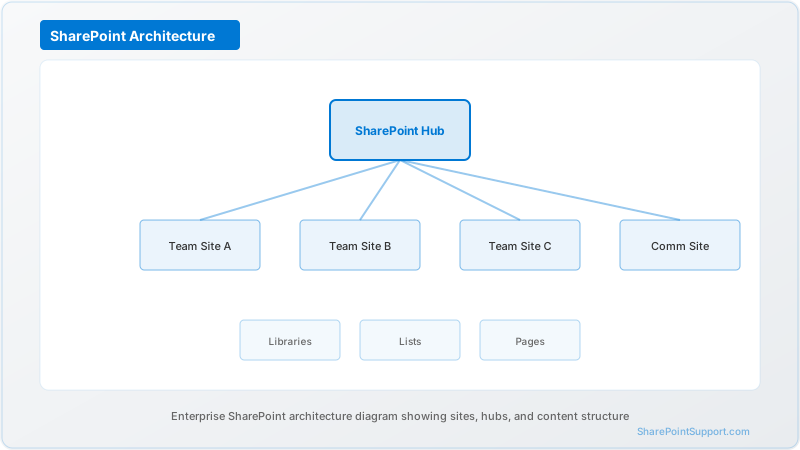
Modern SharePoint intranets use hub site architecture to organize content by business function while maintaining consistent navigation and branding.
Recommended Hub Structure
```
Intranet Root Hub
HR Hub (Benefits, Policies, Onboarding, Career Development)
IT Hub (Self-Service, Security, Software, Announcements)
Finance Hub (Policies, Expense Reports, Budget Tools, Reports)
Operations Hub (Facilities, Safety, Procedures)
Projects Hub (Individual project sites)
```
Associate sites to hubs rather than creating deep hierarchies. Maintain maximum two levels of site nesting. Each site should belong to exactly one hub. All sites in a hub inherit the hub navigation and header design, and hub-scoped search includes content from all associated sites.
Homepage Design
The homepage is the most visited intranet page. It should function as a news aggregator and wayfinding hub rather than a document repository.
Priority Components
Place News and Announcements above the fold using the News web part with audience targeting so employees see relevant content. Include eight to twelve Quick Links for the most-used tools and resources such as the IT helpdesk, expense reports, benefits portal, and time tracking. Add a People Directory with search-first access and org chart integration. Include an Events Calendar showing company-wide and relevant department events.
Design Principles
Keep the homepage uncluttered. Every element must earn its space through usage data. Remove components that analytics show users ignore. Refresh content weekly at minimum to give users a reason to return. Use audience targeting to personalize content so different roles see different Quick Links, news, and resources.
Navigation Design
Mega Menu Navigation
Modern SharePoint supports mega menu navigation displaying multiple columns of links organized by category. Design the mega menu with no more than seven top-level categories. Include audience targeting on navigation links. Test navigation with representative users from different departments. Keep labels short and action-oriented.
Search-First Design
Invest in search configuration over navigation complexity. Configure search result types for common content categories. Set up bookmarks for frequently searched terms that link directly to the right resource. Configure search verticals for sites, people, files, and news. Create a prominent search box on the homepage.
Content Strategy
Content Ownership Model
Assign content owners to every section of the intranet. Content owners are responsible for creating new content, reviewing existing content quarterly, archiving or deleting outdated content, and maintaining accuracy and relevance. Without clear ownership, content quality degrades rapidly.
Editorial Calendar
Establish an editorial calendar that plans content across the organization. Coordinate department communications to prevent message overload. Schedule evergreen content for slow news periods. Align content themes with business milestones and seasons.
Mobile Optimization
Design the intranet mobile-first. More than half of intranet visits come from mobile devices. Test all pages in the SharePoint mobile app and in mobile browsers. Keep paragraphs short, use bullet points, optimize images for fast loading on cellular connections, and verify that all critical functionality works on small screens.
Governance Framework
Site Provisioning
Control how new sites are created. Implement site design templates that enforce branding, navigation, and default content types automatically. Require business justification for new sites. Route provisioning requests through an approval workflow.
Content Lifecycle
Define content lifecycle policies including creation standards, review schedules, archival criteria, and deletion procedures. Automate where possible using retention policies and scheduled review reminders. Without lifecycle governance, intranets accumulate thousands of outdated pages that undermine credibility.
Measurement
Track intranet success through adoption metrics including unique visitors, page views, search usage, mobile versus desktop ratio, and content freshness scores. Report metrics monthly to stakeholders and use data to drive continuous improvement.
Content Governance and Freshness Management
The number one reason enterprise intranets fail is stale content. Pages that have not been updated in months signal to employees that the intranet is not maintained and not worth visiting. Implement a content governance framework that assigns explicit ownership for every section of the intranet, establishes review schedules that require content owners to verify and update their pages at least quarterly, configures content expiration reminders that notify owners when their pages approach the freshness threshold, and provides editorial calendar templates that help communications teams plan a consistent cadence of fresh content.
Use SharePoint site analytics to identify pages with declining traffic, high bounce rates, or zero visits in the past 30 days. These pages are candidates for either refresh, consolidation with other pages, or retirement. Create a monthly content health report that tracks the percentage of pages updated within the last 90 days and set an organizational target of 90 percent or higher content freshness across the intranet.
Personalization and Audience Targeting
Effective intranets serve diverse employee populations with different information needs based on their role, department, location, and seniority. SharePoint audience targeting enables you to show specific navigation links, news posts, web parts, and page sections to defined audiences without restricting access to the underlying content. Configure audience targeting using Azure AD security groups, Microsoft 365 groups, or dynamic audience rules that automatically adjust as employees change roles or locations. This personalization ensures that each employee sees the content most relevant to their work while maintaining a consistent overall intranet structure.
Design your audience targeting strategy around the three to five most impactful audience dimensions for your organization. Typically these include department or business unit, geographic location, job level or role category, and employment type such as full-time versus contractor. Test targeting rules thoroughly before deployment to ensure that every employee sees appropriate content and that no critical information is accidentally hidden from audiences that need it.
Our SharePoint intranet design team creates high-adoption intranets for enterprise organizations. Contact us for an intranet design workshop and architecture plan.
Advanced Intranet Design Patterns
Personalization Strategies
Modern SharePoint intranets can deliver personalized experiences through audience targeting, user profile properties, and dynamic content web parts. Configure audience targeting on news web parts, Quick Links, and navigation items to show different content to different user segments based on department, location, job title, or custom Azure AD attributes.
Use the Microsoft Graph Toolkit components in SPFx web parts to build deeply personalized dashboard elements that show the user's upcoming calendar events, recent documents, frequent contacts, and assigned tasks. These personalized elements increase intranet stickiness by making the homepage a productive starting point for the workday rather than just a news bulletin board.
Viva Connections Integration
Deploy Viva Connections to surface your SharePoint intranet as a branded app inside Microsoft Teams. This is critical for organizations where users spend their workday in Teams rather than in a browser. Viva Connections inherits the home site design, navigation, and news feed, extending intranet reach to the Teams mobile and desktop apps. Configure the Viva Connections dashboard with adaptive cards for high-value quick actions like submitting time off requests, viewing pay stubs, and accessing the IT helpdesk.
Multilingual Intranet Architecture
For global organizations, design the intranet architecture to support multiple languages from the start. Enable multilingual pages on communication sites and configure translator roles for each supported language. Design navigation with translated labels. Consider whether a single global intranet with translated content is appropriate or whether regional hub sites with locally managed content better serve your workforce.
Intranet Performance Optimization
Page Load Performance
Target a Largest Contentful Paint of under 2.5 seconds for the intranet homepage. Optimize hero images to under 200 KB. Minimize the number of web parts on the homepage to under 15. Enable the Office 365 CDN for static assets. Avoid embedding third-party iframes that block page rendering.
Use the SharePoint page diagnostics tool during design to identify performance issues before launch. Address any findings related to large images, excessive API calls, or non-optimized custom web parts before the intranet goes live.
Search Performance and Relevance
Configure search to deliver relevant results for the most common employee queries. Analyze search query logs to identify the top 50 queries that return poor results. Create search bookmarks that link these queries directly to the correct resource. Configure result types that display rich results for common content categories. Create promoted results for authoritative sources on frequently searched topics.
Measuring Intranet Success
Key Performance Indicators
Track these KPIs monthly to evaluate intranet health. Unique visitors should reach at least 70 percent of your workforce monthly. Return visit rate should exceed 40 percent weekly. Search success rate should exceed 75 percent measured by searches that result in a click. News readership should reach at least 50 percent of the target audience for organization-wide announcements. Mobile adoption should reflect your workforce mobility with a target of 30 to 50 percent mobile visits.
Continuous Improvement Cycle
Implement a quarterly improvement cycle that includes reviewing analytics to identify low-performing content and navigation paths, conducting user feedback sessions with representative employees, implementing targeted improvements based on data and feedback, and measuring the impact of changes in the following quarter.
This data-driven approach ensures the intranet evolves with the organization's needs rather than stagnating after the initial launch excitement fades.
Future-Proofing Your Intranet Design
Design your intranet architecture to accommodate emerging Microsoft 365 capabilities including Microsoft Copilot integration that will surface intranet content through AI-powered queries, Microsoft Loop components that enable collaborative widgets on intranet pages, expanded Viva module integration for employee experience features, and enhanced personalization powered by Microsoft Graph signals. Build your intranet on standard SharePoint components rather than heavy custom development so you can adopt new capabilities as they become available without major redesign.
Enterprise Implementation Best Practices
In our 25+ years of enterprise SharePoint consulting, we have designed and deployed intranet solutions for organizations with 500 to 150,000 employees across every industry. The intranet implementations that achieve high adoption and sustained engagement share a common foundation: they are designed around employee needs rather than organizational hierarchy.
- Conduct a User Needs Assessment Before Designing Navigation: Survey and interview employees across departments and levels to understand what information they need daily, where they currently struggle to find content, and what tasks they perform most frequently on the intranet. Design your navigation, hub structure, and home page layout based on these findings rather than mirroring the organizational chart.
- Implement a Hub Site Architecture with Clear Purpose: Every hub site should serve a distinct audience or purpose. Avoid creating hubs that overlap in scope or serve as generic containers. Define each hub's mission, target audience, content owners, and governance requirements before provisioning. Link related hubs through shared navigation and cross-hub content rollups that help users discover relevant information across organizational boundaries.
- Design for Mobile First: Over 40 percent of intranet traffic in most organizations comes from mobile devices, yet many intranets are designed exclusively for desktop viewing. Test every page, web part, and navigation element on actual mobile devices. Prioritize critical information and quick actions in the mobile layout rather than simply shrinking the desktop experience.
- Establish a Content Publishing Governance Model: An intranet is only as valuable as the freshness and accuracy of its content. Assign content owners for every section, implement editorial review workflows, configure content expiration that flags stale pages for review, and publish a content calendar that ensures regular updates across all intranet sections.
- Measure Engagement and Iterate Continuously: Deploy analytics that track page views, unique visitors, search queries, time on page, and task completion rates. Review these metrics monthly with content owners and stakeholders. Use the data to retire underperforming content, promote popular resources, and refine navigation based on actual usage patterns rather than assumptions.
Governance and Compliance Considerations
Intranet deployments in SharePoint must address compliance requirements that many organizations overlook because intranets are perceived as internal communication tools rather than regulated information systems. However, intranets frequently contain policy documents, employee data, financial results, and other content subject to regulatory controls.
For HIPAA-regulated organizations, intranet pages that reference clinical protocols, patient population statistics, or health plan information must be access-controlled to prevent unauthorized disclosure. Apply sensitivity labels to health-related content, restrict access to human resources pages containing employee health information, and ensure that news posts do not inadvertently disclose protected information.
Financial services organizations must control access to intranet pages containing material non-public information, internal financial results, and strategic plans that could constitute insider information. Implement publication workflows that include compliance review for financially sensitive announcements and restrict access to pre-release financial content to authorized personnel only.
Government organizations must ensure that intranet content classifications align with security frameworks and that access controls prevent unauthorized access to controlled content published through the intranet.
Establish content governance policies for your intranet that address publication approval requirements, content classification standards, access restrictions for sensitive pages, and retention rules for archived communications. Implement editorial workflows that route sensitive content through compliance review before publication. Track content freshness and enforce review cycles that ensure published policies and procedures remain current and accurate. Our SharePoint intranet specialists design communication architectures that engage employees while maintaining the compliance controls your regulated environment requires.
Ready to build an intranet that employees actually want to use? Our intranet specialists have designed and deployed engaging digital workplaces for organizations with hundreds to tens of thousands of employees. Contact our team for an intranet strategy consultation, and explore how our SharePoint consulting services can create a connected employee experience.
Common Challenges and Solutions
Organizations implementing SharePoint Intranet Design consistently encounter obstacles that, if left unaddressed, undermine adoption and erode stakeholder confidence. Drawing on two decades of enterprise SharePoint consulting, these are the challenges we see most frequently and the proven approaches for overcoming them.
Challenge 1: Content Sprawl and Information Architecture Degradation
Over time, SharePoint Intranet Design environments accumulate redundant, outdated, and trivial content that degrades search relevance and confuses users. Without proactive content lifecycle management, the signal-to-noise ratio deteriorates and user trust in the platform erodes. The resolution requires a structured approach: establishing automated retention policies that flag content for review after defined periods of inactivity, combined with content owner accountability structures that assign clear responsibility for each site collection and library. Organizations that address this proactively report 40 to 60 percent fewer support tickets within the first 90 days of deployment. Establishing a dedicated governance committee with representatives from IT, compliance, and business stakeholders ensures ongoing alignment between technical configuration and organizational objectives.
Challenge 2: Compliance and Audit Readiness Gaps
SharePoint Intranet Design implementations in regulated industries often lack the audit trail depth and policy enforcement rigor required by frameworks such as HIPAA, SOC 2, and GDPR. Retroactive compliance remediation is significantly more expensive and disruptive than building compliance into the initial design. We recommend embedding compliance requirements into the information architecture from day one. Configure Microsoft Purview retention labels, DLP policies, and audit logging before deploying content, and validate compliance posture through regular internal audits. Tracking these metrics through SharePoint health dashboards provides early warning indicators that allow administrators to intervene before minor issues become systemic problems affecting enterprise-wide productivity.
Challenge 3: Inconsistent Governance Across Business Units
When different departments implement SharePoint Intranet Design independently, inconsistent naming conventions, metadata schemas, and security configurations create silos that undermine cross-functional collaboration and complicate compliance reporting. The most effective mitigation strategy involves centralizing governance policy definition while allowing controlled flexibility at the departmental level. A hub-and-spoke governance model balances enterprise consistency with departmental autonomy. Enterprises operating in regulated industries such as healthcare and financial services must pay particular attention to this challenge because compliance violations carry significant financial and reputational consequences. Regular audits conducted quarterly at minimum help organizations maintain alignment with evolving regulatory requirements and internal policy updates.
Challenge 4: Migration and Legacy Content Complexity
Organizations transitioning legacy content into SharePoint Intranet Design often underestimate the complexity of mapping old structures, metadata, and permissions to modern architectures. Failed migrations erode user confidence and create parallel systems that duplicate effort. Addressing this requires conducting thorough pre-migration content audits that classify and prioritize content based on business value. Invest in automated migration tools that preserve metadata fidelity and permission integrity while providing detailed validation reports. Organizations that invest in structured change management programs achieve adoption rates 35 percent higher than those relying on organic discovery alone. Executive sponsorship combined with department-level champions creates the organizational momentum necessary for sustained success.
Integration with Microsoft 365 Ecosystem
SharePoint Intranet Design does not operate in isolation. Its value multiplies when connected to the broader Microsoft 365 ecosystem, creating unified workflows that eliminate context switching and reduce manual data transfer between applications.
Microsoft Teams Integration: Configure Teams notifications that alert stakeholders when SharePoint Intranet Design content changes, ensuring that distributed teams stay informed about updates without relying on manual communication workflows. Teams channels automatically provision SharePoint document libraries, which means sharepoint intranet design configurations and content flow seamlessly between collaborative conversations and structured document management. Users can surface SharePoint content directly within Teams tabs, reducing the friction that typically causes adoption to stall.
Power Automate Workflows: Create event-driven automations that respond to SharePoint Intranet Design changes in real time, triggering downstream processes such as notifications, data transformations, and cross-system synchronization. Automated workflows triggered by SharePoint events such as document uploads, metadata changes, or approval completions eliminate repetitive manual tasks. Organizations typically automate 15 to 25 processes within the first quarter, saving an average of 8 hours per week per department. These automations also create audit trails that satisfy compliance requirements for regulated industries.
Power BI Analytics: Connect SharePoint Intranet Design list and library data to Power BI datasets for advanced analytics that transform raw operational data into strategic business intelligence accessible to decision makers across the organization. Connecting SharePoint data to Power BI dashboards provides real-time visibility into content usage patterns, adoption metrics, and operational KPIs. Decision makers gain actionable intelligence without requiring manual report generation, enabling faster response to emerging trends and potential issues.
Microsoft Purview and Compliance: Configure data loss prevention policies that monitor SharePoint Intranet Design content for sensitive information patterns, blocking or restricting sharing actions that could violate compliance requirements. Sensitivity labels, data loss prevention policies, and retention schedules configured in Microsoft Purview extend automatically to sharepoint intranet design content. This unified compliance framework ensures that governance policies apply consistently across the entire Microsoft 365 environment rather than requiring separate configuration for each workload. For organizations subject to HIPAA, SOC 2, or FedRAMP requirements, this integrated approach significantly reduces compliance management overhead.
Getting Started: Next Steps
Implementing SharePoint Intranet Design effectively requires more than technical configuration. It demands a strategic approach grounded in your organization's specific business requirements, compliance obligations, and growth trajectory. The difference between a deployment that delivers measurable ROI and one that becomes shelfware often comes down to the quality of upfront planning and expert guidance.
Begin with a focused assessment of your current SharePoint environment. Evaluate your existing information architecture, permission structures, content lifecycle policies, and user adoption patterns. Identify gaps between your current state and the target state required for successful sharepoint intranet design implementation. This assessment typically takes 2 to 4 weeks and produces a prioritized roadmap that aligns technical work with business outcomes.
Our SharePoint specialists have guided organizations across healthcare, financial services, government, and education through hundreds of successful implementations. We bring deep expertise in SharePoint architecture, governance frameworks, and compliance alignment that accelerates time to value while minimizing risk.
Ready to move forward? Contact our team for a complimentary consultation. We will assess your environment, identify quick wins, and develop a phased implementation plan tailored to your organization's needs and timeline. Whether you are starting from scratch or optimizing an existing deployment, our enterprise SharePoint consultants deliver the depth and accountability enterprise SharePoint work requires.
Written by the SharePoint Support Team
Senior SharePoint Consultants | 25+ Years Microsoft Ecosystem Experience
Our senior SharePoint consultants bring deep expertise spanning 500+ enterprise migrations and compliance implementations across HIPAA, SOC 2, and FedRAMP environments. We cover SharePoint Online, Microsoft 365, migrations, Copilot readiness, and large-scale governance.
Expert SharePoint Services
Frequently Asked Questions
What makes a successful SharePoint intranet?▼
How much does a SharePoint intranet project typically cost?▼
Should we use Viva Connections or a custom SharePoint intranet?▼
How do we measure SharePoint intranet ROI?▼
What is the recommended SharePoint site architecture for large enterprises?▼
Need Expert Help?
Our SharePoint consultants are ready to help you implement these strategies in your organization.
Continue Reading in Intranets
Viva Connections and SharePoint Home Site Strategy for 2026
Viva Connections surfaces SharePoint inside Teams. A complete strategy for home site design, dashboard configuration, and the architecture that makes the employee experience work.
IntranetsDesigning Modern SharePoint Intranets: 2025 Best Practices and Trends
Create engaging employee experiences with modern SharePoint intranet design principles and real-world examples.
IntranetsViva Connections Deployment: Building Your Modern Employee Experience Platform
Deploy Microsoft Viva Connections to create a personalized employee experience hub that brings together communications, resources, and tools in one accessible location.
ComplianceSharePoint HIPAA Compliance Guide: Configuring Microsoft 365 for Healthcare
Complete guide to making SharePoint Online HIPAA compliant. Covers Business Associate Agreements, PHI controls, encryption, audit logging, access management, and Microsoft Purview configuration for healthcare organizations.
GovernanceSharePoint Document Library Best Practices: Complete Setup Guide for 2026
Master SharePoint document library configuration. Covers metadata columns, content types, views, version history, retention labels, permissions, co-authoring, and performance optimization for enterprise libraries.
StrategySharePoint vs Google Drive: Which Should You Choose in 2026?
Detailed comparison of Microsoft SharePoint vs Google Drive for enterprise use. Covers file storage, collaboration, permissions, compliance, Teams/Workspace integration, migration, and total cost of ownership.