
SharePoint Modern Pages: Creating Engaging Digital Experiences
Modern pages are the content creation backbone of SharePoint Online. They replace classic wiki pages and publishing pages with a responsive, mobile-friendly canvas that supports rich multimedia, interactive web parts, and professional layouts without requiring any code. Every intranet, department portal, and project site relies on modern pages for communication.
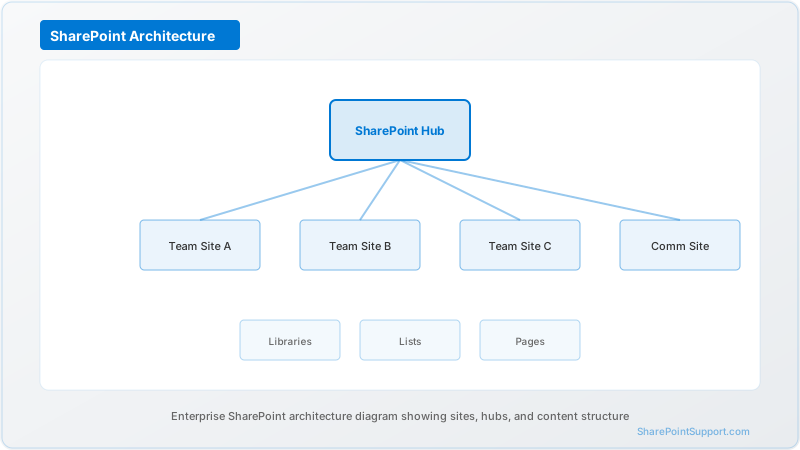
This guide covers page creation, design principles, web part configuration, news publishing, and page management for enterprise SharePoint environments.
---
Page Types
Site Pages
Standard pages for any content purpose. Site pages can contain text, images, web parts, videos, and embedded content. They are versioned, support co-authoring, and can be promoted as news posts.
News Posts
News posts are site pages with enhanced distribution. When published as news, the page appears in the SharePoint start page news feed, the site's news web part, hub-level news aggregation, Viva Connections feed, and the Teams activity feed (with Viva Connections). Create a page and click Post news from the command bar to promote it as news.
News Links
Lightweight news items that link to external content rather than hosting content on a SharePoint page. Use news links to surface industry articles, partner announcements, or content hosted on other platforms within your SharePoint news feed.
---
Page Design Fundamentals
Sections and Layouts
Modern pages use a section-based layout system. Each section spans the full width of the page and can be divided into columns.
Section layouts:
- One column for full-width content
- Two columns with equal width or one-third/two-thirds split
- Three columns for dashboard-style layouts
- Vertical section adds a sidebar alongside the main content area
Section Backgrounds
Each section can have a background color: None (white), Neutral (light gray), Soft (tinted), or Strong (dark with white text). Use background alternation to create visual hierarchy and guide readers through the page.
Content Width
Page content can be set to standard width (for text-heavy pages) or full width (for visual pages with hero images and dashboards). Configure this in page details under Page layout.
---
Essential Web Parts
Text Web Part
The rich text editor supports headings (H2, H3, H4), bold, italic, and underline formatting, bulleted and numbered lists, hyperlinks, tables, block quotes, and code snippets. Structure your text with clear headings to improve readability and search engine optimization. Use H2 for main sections and H3 for subsections.
Image and Media
The image web part supports uploading images, selecting from the site's assets, searching stock images, and linking to external image URLs. Configure image sizing (automatic, custom), alt text for accessibility, and optional captions and links.
The Stream web part embeds videos from Microsoft Stream or YouTube. Videos auto-play in the page and support captions and transcripts.
Hero Web Part
The hero displays up to five items in a visually prominent layout. Each item shows an image, title, description, and link. Use the hero on landing pages to highlight key resources, news, or calls to action.
Hero layouts: Tiles (1 to 5 items in a grid), Layers (overlapping cards), or single item full-width.
Quick Links
Display a collection of links in various layouts: Compact, List, Tiles, Button, or Filmstrip. Use quick links for navigation to key resources, frequently accessed sites, and tools.
News Web Part
Aggregates news posts from the current site, hub sites, or specific sites. Configure news sources, filtering, and the number of items displayed. Use on landing pages and hub sites to keep users informed.
People Web Part
Display team members or contacts with photos, names, titles, and contact information pulled from Azure AD profiles.
Highlighted Content
Dynamically displays content from SharePoint based on filters. Show recent documents, trending content, items from specific sites, or content matching metadata criteria. The most versatile web part for creating dynamic pages.
---
News Publishing Workflow
Creating News
- Navigate to a communication site
- Click New then News post
- Choose a template or start blank
- Add content using the page editor
- Set the first image as the news thumbnail
- Add page properties (author, publish date, description)
- Click Post news
News Templates
Create custom news templates to ensure consistent formatting. Design a template with your organization's standard layout (header image, author section, body content areas, call to action) and save it as a page template. News authors select the template when creating posts.
News Distribution
Published news posts distribute automatically to the site's news web part, the SharePoint start page for site followers, hub site news aggregation for all associated sites, Viva Connections feed for Teams users, and email digests when configured through SharePoint notification settings.
Scheduling News
Schedule news posts to publish at a future date and time. This is essential for coordinated communications where content must go live simultaneously with other announcements.
---
Page Templates
Creating Templates
Design a page with your standard layout and save it as a template. Go to Page details then Save as template then provide a name and description. The template appears in the page template gallery when users create new pages.
Template Categories
Organize templates for different use cases. Common categories include news templates for announcements, updates, and spotlights. Department templates for team pages and resource pages. Project templates for status updates and milestone pages. Event templates for event announcements and recaps.
---
Page Performance Optimization
Image Optimization
Large images are the primary cause of slow page loads. Resize images to the display size before uploading (do not upload a 5000 pixel image for a 1200 pixel display area). Use JPEG for photographs and PNG for graphics with transparency. Compress images using tools like TinyPNG before uploading. Use the built-in image web part which handles responsive sizing.
Web Part Count
Each web part adds to page load time. Keep the total number of web parts under 15 per page. Consolidate related information into fewer web parts rather than using many small ones.
Third-Party Web Parts
Third-party SPFx web parts can significantly impact performance if they make external API calls, load heavy JavaScript libraries, or render complex visualizations. Evaluate performance impact before deploying third-party web parts to high-traffic pages.
---
Accessibility
Accessible Page Design
SharePoint modern pages support accessibility standards when content is created properly. Use heading hierarchy correctly (H2, H3, H4 in order). Add alt text to all images. Use sufficient color contrast between text and backgrounds. Provide captions for videos. Use descriptive link text (not click here). Structure tables with header rows.
Accessibility Checker
SharePoint includes a built-in accessibility checker that scans pages for common issues. Run the checker before publishing and fix all identified issues.
---
Page Management
Version History
Modern pages maintain version history. Each save creates a new minor version. Publishing creates a major version. Restore previous versions from the page details panel.
Page Approval
Configure page approval workflows to require review before publication. Navigate to Pages library settings and configure approval with Power Automate. Submitted pages show as Pending until approved.
Analytics
View page analytics from the page details panel. Metrics include unique viewers, total views, average time on page, traffic sources, and viewer demographics (department, location). Use analytics to understand what content resonates and inform future page creation.
---
Frequently Asked Questions
Can I add custom CSS to modern pages?
Not directly. Modern pages do not support custom CSS injection. Use SPFx Application Customizers for tenant-wide styling or SPFx web parts for component-level styling.
How many pages can a site have?
The practical limit is around 5,000 pages per site for optimal performance, though the platform supports more.
Can pages be exported or backed up?
Use PnP PowerShell to export pages as part of a site template. Individual pages can be exported as HTML through browser save functionality.
---
For help designing engaging SharePoint pages for your intranet, contact our design team for a content and design assessment. We create modern SharePoint page experiences for organizations where employee engagement and communication drive business outcomes.
Advanced Page Techniques
Dynamic Content Pages
Create pages that display different content based on the viewing user. Use audience-targeted web parts to show department-specific news, role-based quick links, and personalized highlighted content. The same page serves different content to different users, reducing the need for department-specific pages.
Multi-Language Pages
For global organizations, create multilingual versions of key pages. Enable multilingual features on communication sites, create translation copies, and assign translators. SharePoint automatically directs users to the page version matching their browser language.
Page Performance Monitoring
Use the SharePoint page diagnostics tool (a browser extension from Microsoft) to analyze page performance. The tool identifies slow web parts, large images, excessive API calls, and configuration issues that impact load time. Run diagnostics on every page before publishing and fix all issues flagged as critical.
Content Scheduling and Lifecycle
Schedule pages to publish at future dates for coordinated announcements. Set page expiration dates to automatically flag or remove outdated content. Create a content calendar in a SharePoint list that tracks planned publications, assigned authors, review dates, and publication status. Link the calendar to your page creation workflow so authors receive reminders when their assigned pages are due.
Page Collections and Navigation
Organize related pages into collections using metadata tags. Create a page library view that groups pages by topic, department, or content type. Add a Highlighted Content web part configured to display pages from the current site filtered by metadata, creating a dynamic table of contents that updates automatically as new pages are published.
Enterprise Implementation Best Practices
In our 25+ years of enterprise SharePoint consulting, we have designed communication strategies and publishing architectures for organizations that need to reach tens of thousands of employees with consistent, timely, and engaging content. The communication sites and news features in SharePoint provide powerful enterprise publishing capabilities when properly configured and governed.
- Establish a Communication Site Architecture Strategy: Design your communication site portfolio with clear purpose separation. Create dedicated communication sites for corporate news, department announcements, policy updates, and executive communications. Each site should have defined content owners, publishing workflows, and audience targeting configuration that ensures the right content reaches the right employees.
- Implement News Publishing Workflows: Enterprise communications require editorial review before publication. Configure approval workflows using Power Automate that route news posts through appropriate reviewers based on content type, audience scope, and sensitivity. Require legal review for policy changes, communications review for company-wide announcements, and department owner approval for team-level news.
- Leverage Audience Targeting for Relevance: SharePoint's audience targeting capability ensures users see content relevant to their role, department, and location. Configure targeting on news web parts, navigation links, and page sections using Azure AD security groups and Microsoft 365 groups. Relevant content drives engagement while reducing information overload that causes employees to disengage from internal communications entirely.
- Design Pages for Scanability and Mobile Consumption: Enterprise employees spend seconds, not minutes, on internal communications. Design pages with clear headlines, concise summaries, bullet-pointed key takeaways, and prominent calls to action. Test page layouts on mobile devices where over 40 percent of intranet consumption occurs and ensure critical information is visible without scrolling.
- Measure Communication Effectiveness: Track page views, unique readers, average time on page, and click-through rates for calls to action. Compare these metrics against your audience size to calculate reach and engagement rates. Use these insights to refine your content strategy, optimize publishing frequency, and demonstrate the value of internal communications investment to executive stakeholders.
Governance and Compliance Considerations
Enterprise communications published through SharePoint carry compliance implications related to content accuracy, accessibility, required disclosures, and retention of organizational communications for regulatory and legal purposes.
For HIPAA-regulated organizations, internal communications that reference patient populations, clinical outcomes, or health plan details must be access-controlled to prevent unauthorized disclosure of aggregate health information that could be combined with other data to identify individuals. Apply sensitivity labels to health-related communications and restrict access to personnel with legitimate business need.
Financial services organizations must ensure that internal communications containing financial results, strategic plans, or market-moving information are restricted to authorized personnel until public disclosure. Implement communication compliance policies that detect potential insider information in SharePoint news posts and route flagged content for compliance review before publication.
Government organizations must ensure that official communications published through SharePoint comply with records management requirements, accessibility standards, and any applicable public affairs review processes.
Establish a communications governance framework that defines publishing authority, editorial review requirements, compliance review triggers, accessibility standards, and retention policies for published content. Configure approval workflows that enforce these governance requirements automatically and maintain audit trails of the publishing process. Archive superseded communications rather than deleting them to maintain a complete record of organizational messaging. Our SharePoint communications specialists design publishing architectures that support effective employee engagement while maintaining compliance with regulatory and accessibility requirements across your organization.
Ready to transform your internal communications with SharePoint? Our communications specialists have designed publishing architectures that reach tens of thousands of employees with engaging, compliant content. Contact our team for a communications strategy consultation, and discover how our SharePoint consulting services can elevate your employee engagement.
Common Challenges and Solutions
Organizations implementing SharePoint Modern Pages consistently encounter obstacles that, if left unaddressed, undermine adoption and erode stakeholder confidence. Drawing on two decades of enterprise SharePoint consulting, these are the challenges we see most frequently and the proven approaches for overcoming them.
Challenge 1: Content Sprawl and Information Architecture Degradation
Over time, SharePoint Modern Pages environments accumulate redundant, outdated, and trivial content that degrades search relevance and confuses users. Without proactive content lifecycle management, the signal-to-noise ratio deteriorates and user trust in the platform erodes. The resolution requires a structured approach: establishing automated retention policies that flag content for review after defined periods of inactivity, combined with content owner accountability structures that assign clear responsibility for each site collection and library. Organizations that address this proactively report 40 to 60 percent fewer support tickets within the first 90 days of deployment. Establishing a dedicated governance committee with representatives from IT, compliance, and business stakeholders ensures ongoing alignment between technical configuration and organizational objectives.
Challenge 2: Compliance and Audit Readiness Gaps
SharePoint Modern Pages implementations in regulated industries often lack the audit trail depth and policy enforcement rigor required by frameworks such as HIPAA, SOC 2, and GDPR. Retroactive compliance remediation is significantly more expensive and disruptive than building compliance into the initial design. We recommend embedding compliance requirements into the information architecture from day one. Configure Microsoft Purview retention labels, DLP policies, and audit logging before deploying content, and validate compliance posture through regular internal audits. Tracking these metrics through SharePoint health dashboards provides early warning indicators that allow administrators to intervene before minor issues become systemic problems affecting enterprise-wide productivity.
Challenge 3: Inconsistent Governance Across Business Units
When different departments implement SharePoint Modern Pages independently, inconsistent naming conventions, metadata schemas, and security configurations create silos that undermine cross-functional collaboration and complicate compliance reporting. The most effective mitigation strategy involves centralizing governance policy definition while allowing controlled flexibility at the departmental level. A hub-and-spoke governance model balances enterprise consistency with departmental autonomy. Enterprises operating in regulated industries such as healthcare and financial services must pay particular attention to this challenge because compliance violations carry significant financial and reputational consequences. Regular audits conducted quarterly at minimum help organizations maintain alignment with evolving regulatory requirements and internal policy updates.
Challenge 4: Migration and Legacy Content Complexity
Organizations transitioning legacy content into SharePoint Modern Pages often underestimate the complexity of mapping old structures, metadata, and permissions to modern architectures. Failed migrations erode user confidence and create parallel systems that duplicate effort. Addressing this requires conducting thorough pre-migration content audits that classify and prioritize content based on business value. Invest in automated migration tools that preserve metadata fidelity and permission integrity while providing detailed validation reports. Organizations that invest in structured change management programs achieve adoption rates 35 percent higher than those relying on organic discovery alone. Executive sponsorship combined with department-level champions creates the organizational momentum necessary for sustained success.
Integration with Microsoft 365 Ecosystem
SharePoint Modern Pages does not operate in isolation. Its value multiplies when connected to the broader Microsoft 365 ecosystem, creating unified workflows that eliminate context switching and reduce manual data transfer between applications.
Microsoft Teams Integration: Configure Teams notifications that alert stakeholders when SharePoint Modern Pages content changes, ensuring that distributed teams stay informed about updates without relying on manual communication workflows. Teams channels automatically provision SharePoint document libraries, which means sharepoint modern pages configurations and content flow seamlessly between collaborative conversations and structured document management. Users can surface SharePoint content directly within Teams tabs, reducing the friction that typically causes adoption to stall.
Power Automate Workflows: Create event-driven automations that respond to SharePoint Modern Pages changes in real time, triggering downstream processes such as notifications, data transformations, and cross-system synchronization. Automated workflows triggered by SharePoint events such as document uploads, metadata changes, or approval completions eliminate repetitive manual tasks. Organizations typically automate 15 to 25 processes within the first quarter, saving an average of 8 hours per week per department. These automations also create audit trails that satisfy compliance requirements for regulated industries.
Power BI Analytics: Connect SharePoint Modern Pages list and library data to Power BI datasets for advanced analytics that transform raw operational data into strategic business intelligence accessible to decision makers across the organization. Connecting SharePoint data to Power BI dashboards provides real-time visibility into content usage patterns, adoption metrics, and operational KPIs. Decision makers gain actionable intelligence without requiring manual report generation, enabling faster response to emerging trends and potential issues.
Microsoft Purview and Compliance: Configure data loss prevention policies that monitor SharePoint Modern Pages content for sensitive information patterns, blocking or restricting sharing actions that could violate compliance requirements. Sensitivity labels, data loss prevention policies, and retention schedules configured in Microsoft Purview extend automatically to sharepoint modern pages content. This unified compliance framework ensures that governance policies apply consistently across the entire Microsoft 365 environment rather than requiring separate configuration for each workload. For organizations subject to HIPAA, SOC 2, or FedRAMP requirements, this integrated approach significantly reduces compliance management overhead.
Getting Started: Next Steps
Implementing SharePoint Modern Pages effectively requires more than technical configuration. It demands a strategic approach grounded in your organization's specific business requirements, compliance obligations, and growth trajectory. The difference between a deployment that delivers measurable ROI and one that becomes shelfware often comes down to the quality of upfront planning and expert guidance.
Begin with a focused assessment of your current SharePoint environment. Evaluate your existing information architecture, permission structures, content lifecycle policies, and user adoption patterns. Identify gaps between your current state and the target state required for successful sharepoint modern pages implementation. This assessment typically takes 2 to 4 weeks and produces a prioritized roadmap that aligns technical work with business outcomes.
Our SharePoint specialists have guided organizations across healthcare, financial services, government, and education through hundreds of successful implementations. We bring deep expertise in SharePoint architecture, governance frameworks, and compliance alignment that accelerates time to value while minimizing risk.
Ready to move forward? Contact our team for a complimentary consultation. We will assess your environment, identify quick wins, and develop a phased implementation plan tailored to your organization's needs and timeline. Whether you are starting from scratch or optimizing an existing deployment, our enterprise SharePoint consultants deliver the expertise and accountability that Fortune 500 organizations demand.
Written by the SharePoint Support Team
Senior SharePoint Consultants | 25+ Years Microsoft Ecosystem Experience
Our senior SharePoint consultants bring deep expertise spanning 500+ enterprise migrations and compliance implementations across HIPAA, SOC 2, and FedRAMP environments. We cover SharePoint Online, Microsoft 365, migrations, Copilot readiness, and large-scale governance.
Expert SharePoint Services
Frequently Asked Questions
What are SharePoint modern pages?▼
How do I create a SharePoint modern page?▼
What is the difference between a page and a news post in SharePoint?▼
How do I use audience targeting on SharePoint pages?▼
Can I use custom page templates in SharePoint Online?▼
Need Expert Help?
Our SharePoint consultants are ready to help you implement these strategies in your organization.
Continue Reading in Content Management
SharePoint Content Types: Complete Implementation Guide
Master SharePoint content types to standardize document templates, enforce metadata, and improve content governance across your organization.
Content ManagementMultilingual SharePoint Sites: Global Communication Guide
Enable effective global communication with SharePoint multilingual features including page translation, navigation localization, and content management for international organizations.
Content ManagementSharePoint Alerts and Notifications Guide
Master SharePoint alerts and notifications to keep users informed about document changes, list updates, and important activities across your sites.
Content ManagementSharePoint List Views: Configuration and Optimization Guide
Master SharePoint list views to organize data effectively. Covers creating custom views, filtering, grouping, formatting, and performance optimization for large lists.
Content ManagementSharePoint Web Parts: Complete Configuration Guide
Master SharePoint web parts for building dynamic pages. Covers all major web parts, configuration options, custom SPFx development, and performance optimization.
Storage & CostCopilot in SharePoint Went GA — And Quietly Started Metering You
Three SharePoint features now bill per use instead of per seat, the default cap is $40 per user per month on top of your Copilot licence, and every one of them is triggered by site owners rather than admins. Here is the exposure math and how to cap it.